Gather and Sow: July 2026
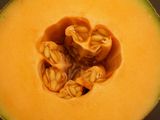
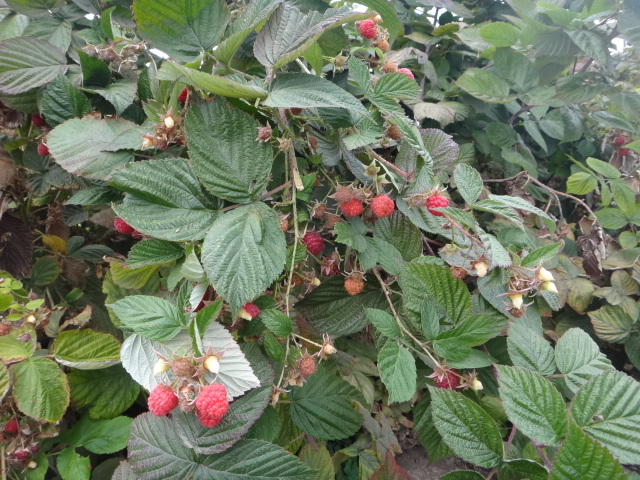
This month we continue our summer romance with the rose family, specifically the cane fruits, or brambles, which include blackberries, raspberries, and their many look-alikes. These cane fruits belong to the branch of the rose family called the Rosoideae, which also includes roses and strawberries. Although these “fruits” are superficially very different, they are all built on the same basic structure: a single flower produces a great many pistils with separate ovaries, each of which becomes a fruit. The many fruits within a flower are then packaged together into a colorful flavorfest of a structure that some people, birds, and mammals like to eat. Ecologically and culinarily they function as a single fruitlike unit, and we casually call them berries (or hips, in the case of roses). But as we saw in June’s newsletter (link), strawberries are not berries at all. They are big fleshy red receptacles covered in small dry achene-type fruits. Rose hips are a bit like inside-out strawberries: their achenes are enclosed by a hollow red shell derived from the hypanthium and other floral parts. In Food for Thought: A ramble through the brambles we compare cane fruits and strawberries, which are very similar, except that cane fruits have invested their bright sweet fleshiness into their fruits instead of their receptacles.
The brambles bring into play another prominent aspect of some of our favorite plants from the rose family: spinescence, including prickles, spines, and thorns. Each of these sharp projections is morphologically and developmentally distinct, and the rose family boasts numerous examples. We break it down in Botany Lab of the Month: Be careful. She’s sharp.
We conclude this month’s newsletter with a selection of relevant media and journal articles in Gleanings and Baker’s Dozen.
Food for Thought
A ramble through the brambles
Summer is the rosiest time of year. We amble through longer days and soft warm nights wearing rose-colored glasses. We dream of lying down on a bed of roses and waking up feeling peachy keen. And our favorite rose family fruits roll out in a summer-long parade, from the debut of strawberries, through the upbeat march of brambles and stone fruits, to the rich notes of pears and apples that herald the waning of the season.
There is something for everyone to love about the rose family, the Rosaceae. Its approximately 3 thousand species represent growth forms ranging from annual herbs, to vines, shrubs, and trees, all sporting an array of leaf sizes and shapes. But to us botanist-cooks, the most charming family trait is the apparent constancy of flower form across the species, which demurely hides a surprising variety of fruit types. At first blush, apple and cherry and blackberry flowers look like small simple roses and are just as lovely, yet they give rise to distinctly different fruits. Because true love demands that we seek out and treasure the unique qualities of the beloved, that’s what we are doing this summer with rose family fruits. June saw us doting upon strawberries and their multiple superior ovaries forming achenes on a fleshy receptacle. This month we have a fling with the dangerous but delicious cane fruits.
Cane fruits, or brambles, are all part of the very large and incredibly genetically diverse genus Rubus. Species of Rubus can be found growing natively almost anywhere in the world, but they are particularly rich in the northern hemisphere from the sub-arctic to the sub-tropics. There are hundreds of species of cane fruits, and some authorities recognize over 1500 of them (POWO). By that count, Rubus would make up around half of the entire rose family. A handful of these species are grown commercially and have been crossed to make varieties such as marionberry, loganberry, boysenberry, and olallieberry. To the delight of hikers the world over, there are also many wild trailside species whose fruits are delicate but nearly as large and just as delicious as commercial varieties.
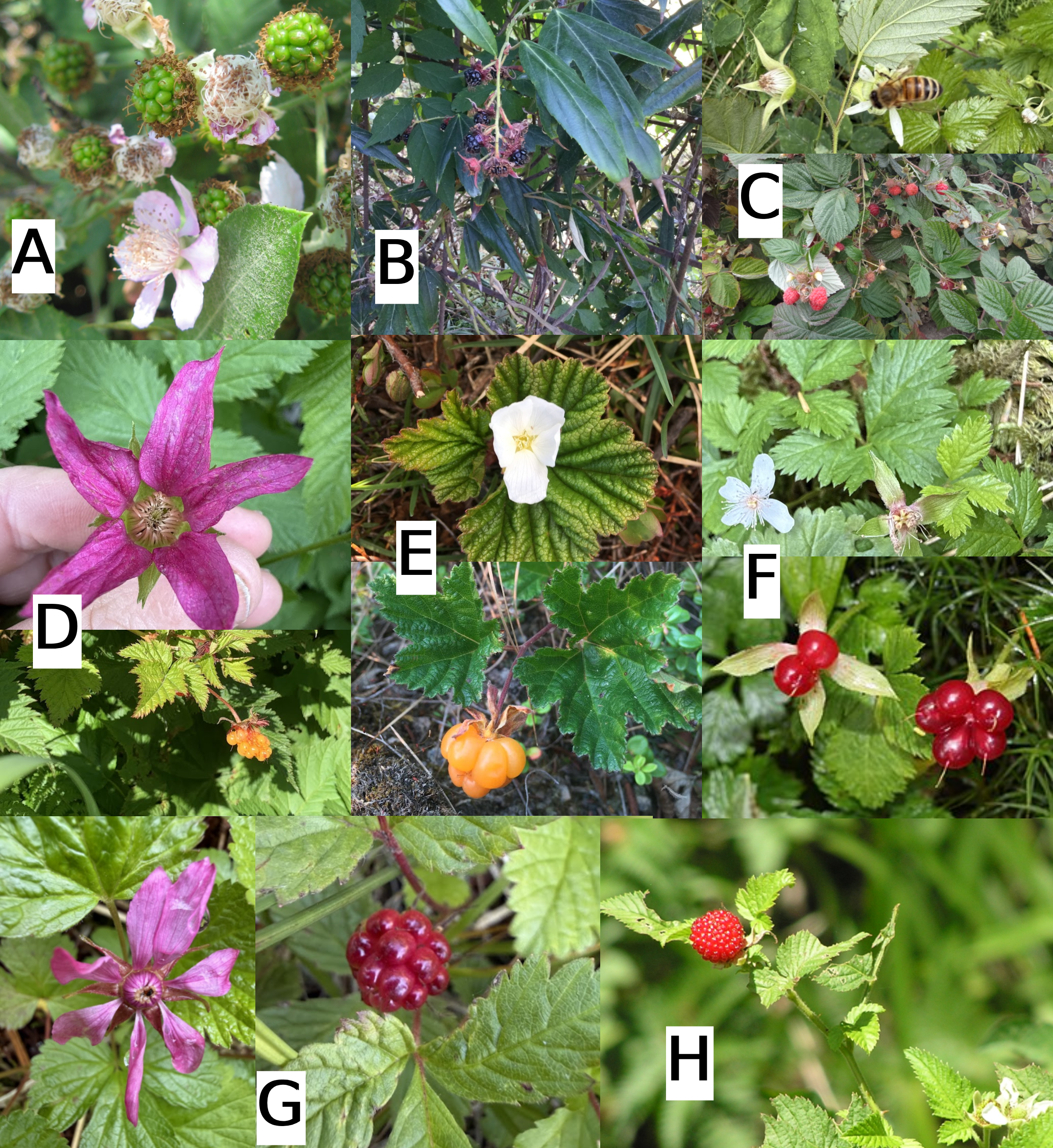
Untangling the prickly history and evolutionary relationships within Rubus has been challenging, because polyploidy is common––ranging up to 18 copies of each chromosome––and many species are hybrids between parents with different numbers of chromosomes (1, 2). It seems that Rubus plants just don’t care how many chromosomes a potential mate has; they combine their gametes and sometimes it works out for the offspring anyway. Some of our favorite commercial hybrids owe their existence to the promiscuity of their parents.
Strawberries are not berries, and neither are the so-called berries of Rubus. Both develop from flowers with many separate pistils that develop into many separate fruits. A cane berry makes fleshy fruits: a raspberry or blackberry is essentially a dome-shaped pile of little plums (drupes), complete with an even smaller pit inside that contains the seed. Botanists describe this type of fruit as an aggregate of drupelets (miniature drupes) or a “drupetum.” As is apparent to anyone who has eaten fresh raspberries or even a spoonful of raspberry jam, the pit fits perfectly into the triangular space between your teeth, right against your gum. The very hard pit material develops from cells in the innermost layer of the ovary wall and consequently is called the endocarp. (The skin is called the epicarp and the flesh is called the mesocarp or, less appealingly, the sarcocarp). Emerging from the fleshy body of each drupelet is a style topped by its stigma. These structures are essential for pollination and therefore fruit development, but according to the New York Times, the scientists at Driscoll’s have been working to make them less obvious to consumers. When it comes to instagrammable brunch items, apparently the public would rather not see these hairy outgrowths of reproductive maturity.
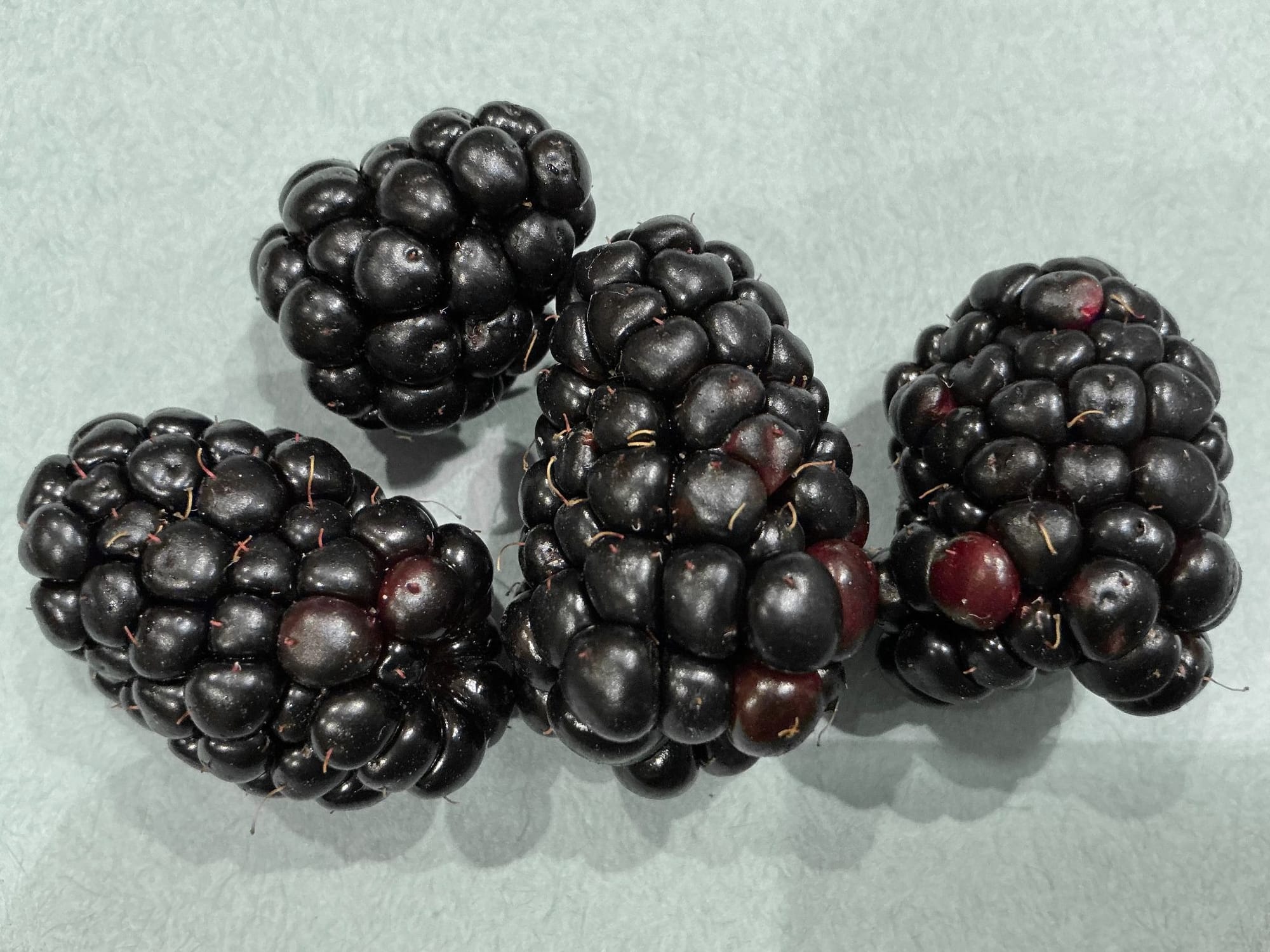
In some cane fruit species, the drupelets can be pulled away from the receptacle like a thimble made of jewel-colored beads. In other species, the drupelets stick to their receptacle, and we must accept that dull part along with the sweet. Raspberries, thimbleberries, and salmonberries separate cleanly, whereas blackberries, cloudberries, and the commercial hybrids marion- logan- boysen- and olallieberries all retain their receptacles. One early study on raspberries (3) found that the vascular tissues connecting drupelets to the receptacle start to break down as the fruits mature, allowing them to detach. But because the sides and bases of the drupelets are covered in fine epidermal hairs that become entangled with each other, the drupelets can cohere without any direct physical connection. By contrast, blackberry drupelets have fewer fine hairs and would not stick together if they were pulled off the receptacle.
We said in our introduction that the flower and fruit structures within the Rubus-rose-strawberry branch of the family (the Rosoideae) are evolutionary variations on a common theme. So how did they get to be different? These groups share a common ancestor so their different evolutionary paths must have started in the same place. It is interesting to consider what that ancestor looked like and how these descendent variations came to be.
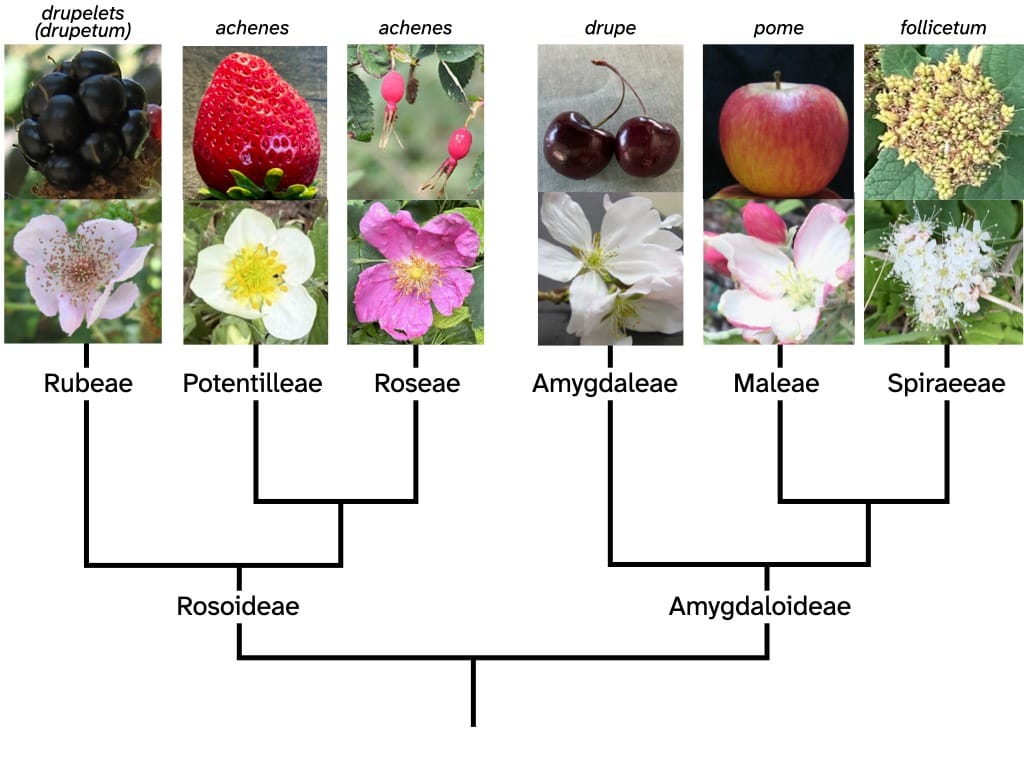
By mapping floral structure and fruit type onto a phylogenetic tree of the Rosoideae clade, botanists have reconstructed a hypothetical common ancestor that most likely had a flower with a fairly flat receptacle bearing numerous achenes (4, 5). In this hypothesized scenario, roses subsequently evolved a deep floral cup, but both strawberries and Rubus evolved a mound-shaped receptacle. Strawberries retained the ancestral achenes but developed a very large red receptacle. In Rubus, the fruit wall became three-layered, essentially adding a fleshy layer to an achene-like pit. Why the difference? One study found that genes are expressed differently during development in cane fruit drupelets compared to strawberry achenes, and that the hardening of cell walls (lignification) is confined to the mini pit of cane fruit drupelets but occurs throughout the ovary wall of strawberry achenes, preventing them from becoming fleshy (6).
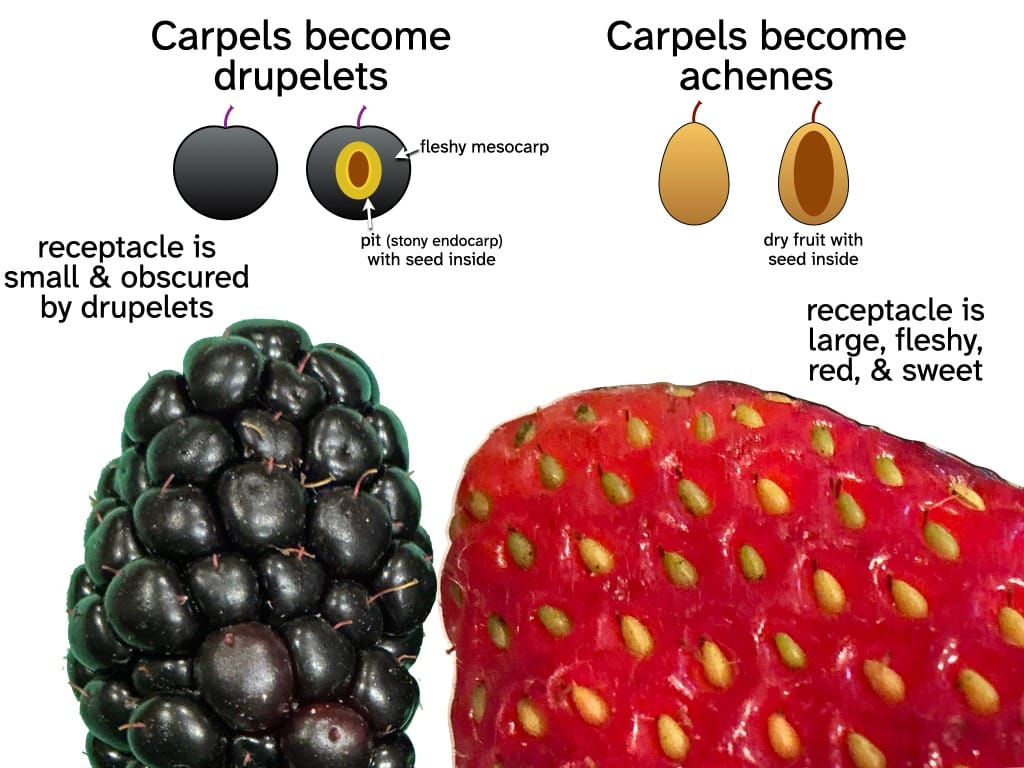
Of course, when you truly love something, no detailed description of even the most admirable qualities could ever be enough to explain your love. Nor can a close-up view of rose family fruits provide any satisfying reasons for our desire, although we hope it has deepened your appreciation. And yet animal desire is at the heart of the plants’ survival. Strawberries and cane fruits are different manifestations of a similar basic floral plan, and to win over its animal partners, each has built up its most fetching features under tens of millions of years of evolutionary pressure. The result in both cases is that the morphologically separate fruits of a flower function ecologically as a single unit. Together they attract animal dispersers by appearing as one large food reward, and they literally stick together (or to their receptacle) as they are harvested and their seeds are carried away from the parent plant. Color, scent, and flavor work further magic on our animal senses. These two groups, then, have converged evolutionarily upon different ways to accomplish the same essential ecological function: to make us want them, beyond all reason, so that their kind may live on.
Botany Lab of the Month
Be careful. She's sharp.
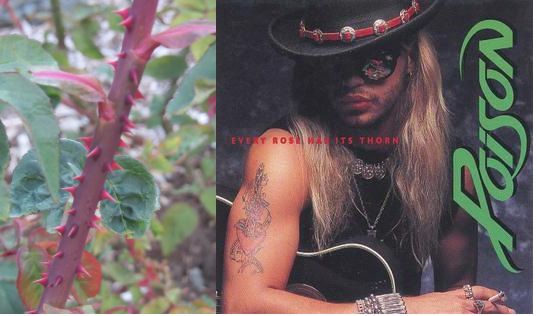
In 1988 American glam metal band Poison released the power ballad “Every Rose Has Its Thorn.” The single ultimately proved to be the band’s only No. 1 hit. The band was neither the first nor the last to use roses and thorns as a metaphor for the inextricable duality of love and pain. William Shakespeare, for example, used it in the first stanza of his Sonnet 35:
No more be grieved at that which thou hast done:
Roses have thorns, and silver fountains mud,
Clouds and eclipses stain both moon and sun,
And loathsome canker lives in sweetest bud.
According to colloquial English, the case is firmly closed that the rose plant’s defensive structures should be referred to as “thorns.” To a botanist, however, roses do not have thorns. They have prickles. So do brambles in the genus Rubus. Bramble prickles are also frequently called thorns. Any major plant nursery will offer “thornless” varieties for sale (7). Unfortunately, prickle is not as poetic a word as thorn, so the misnomer is perpetuated. And while rose and bramble plants do not have thorns, other species in the Rosaceae actually do. Like the armory of a medieval keep, the arsenal of plant physical defenses includes sharp things of various sizes and composition: prickles, spines, and thorns. All can draw blood, but they are developmentally and morphologically distinct. Castle Rosaceae fields numerous examples of spinescence.
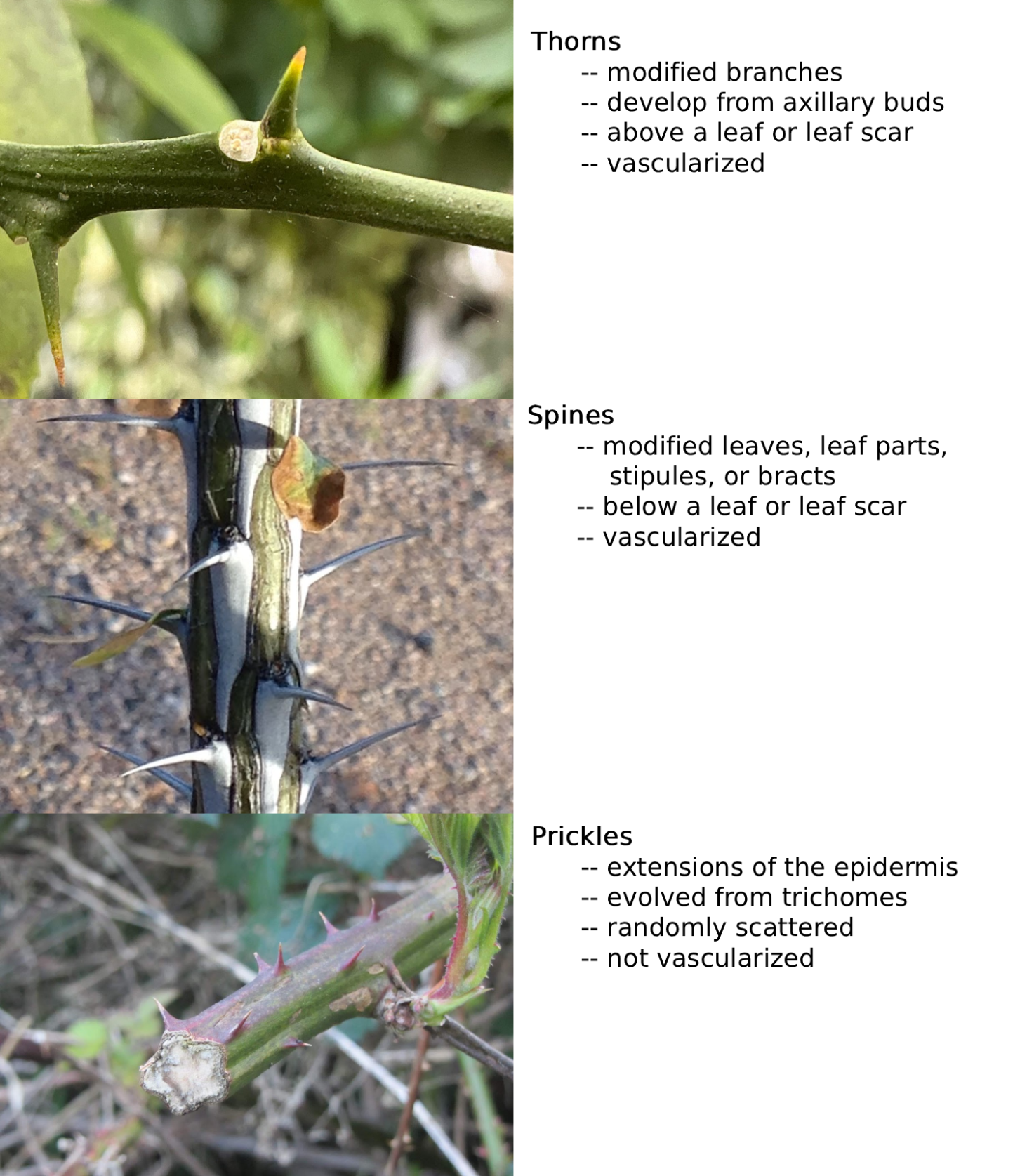
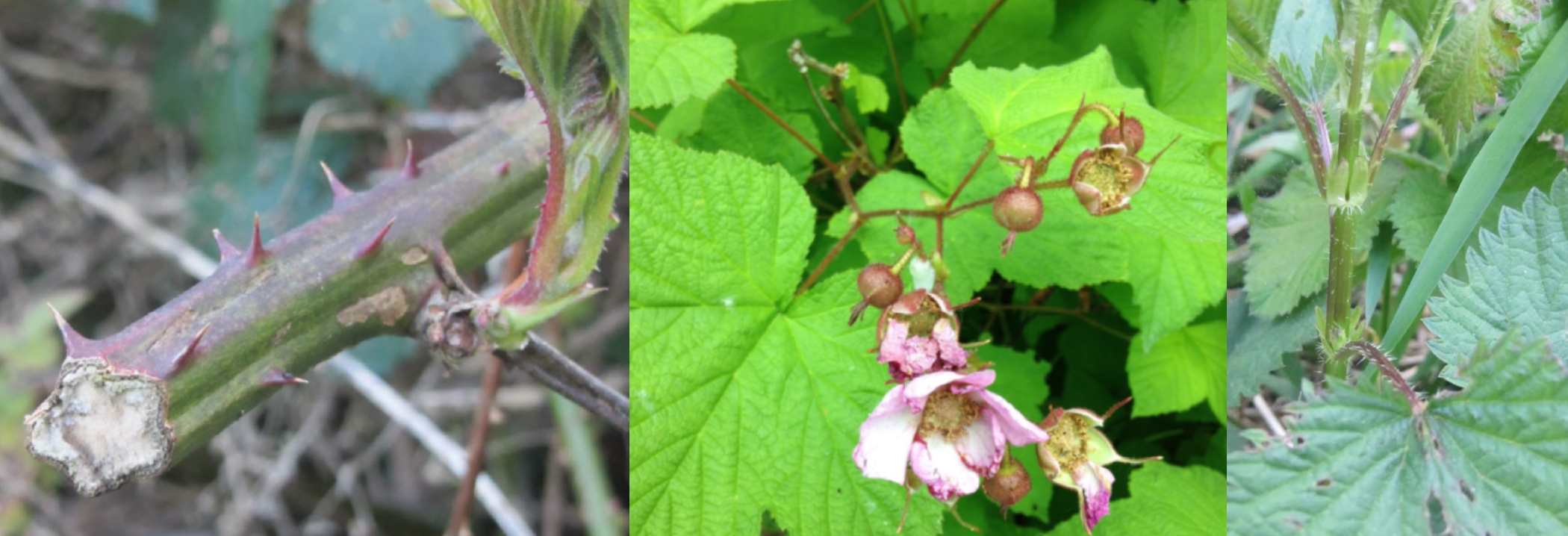
Prickles are extensions of the epidermis, the outermost “skin” on a plant structure. A developing prickle is alive and connected to the plant’s vascular system, but once growth is complete, the prickle becomes lignified (woody) and dies. You can scrape a prickle off of a rose or blackberry stem without harming the plant. A sure sign that a plant is sporting prickles, and not spines or thorns, is that prickles follow no regular pattern. They are scattered randomly along stems because they are not derived from leaves (spines) or branches (thorns), which have a regular phylotactic rhythm. We will briefly describe each of these spinescent structures, providing examples from the Rosaceae where possible.
Prickles in roses and brambles
Prickly species in the rose family are concentrated in the subfamily Rosoideae, specifically in the genera Rosa (the roses) and Rubus (the cane fruits). Prickles in these groups can be painfully robust, but studies of their development reveal that they begin as delicate glandular trichomes––essentially epidermal hairs tipped with a small knob (8, 9). A subset of these glandular trichomes begin to harden into prickles as lignin is deposited in their cell walls. Only a few wild Rubus species have naturally naked stems, including thimbleberry (R. parviflorus), found mostly west of the Rocky Mountains. The most well armed Rubus species have prickles along the full length of their stems, all the way to their flowers and onto the petioles and ribs of their leaves. It is obviously dangerous to harvest the fruits from such heavily defended plants, and in the early 20th century, breeders started to develop prickleless commercial varieties. They dubbed these “thornless,” even though, as we keep emphasizing, every Rubus species is naturally thornless, and the breeders’ target was actually the prickles. When early geneticists discovered the allele responsible for these prickle-free varieties, they named it “spineless” (10). But as we keep emphasizing, every Rubus species is naturally spineless, and the allele actually affects the prickles.
Altering a single characteristic through century-old conventional breeding techniques is nearly impossible, especially when a plant’s genetics are as complicated as they are in Rubus, and so the loss of prickles in these varieties sometimes comes along with less desirable traits. Now breeders can make much more precise changes by editing specific genes, provided that the relevant targets can be found. Recent work has identified a handful of good candidate genes that predict the presence of prickles and, in some cases, also affect glandular trichomes (10, 11).
The stings of nettles (Urtica dioica) are also modified trichomes. They are filled with irritating chemicals. When an animal brushes against the plant, the sharp tip of the stinging trichome breaks the skin, and pressure from within the trichome injects the irritants. Nettles are not in the rose family, but the nettle family (Urticaceae) is in the same taxonomic order (Rosales) as the Rosaceae. While this relationship may point to an evolutionary proclivity within the Rosaceae for spinescent innovation, all forms of plant armoury are found across the plant tree of life.
Thorns
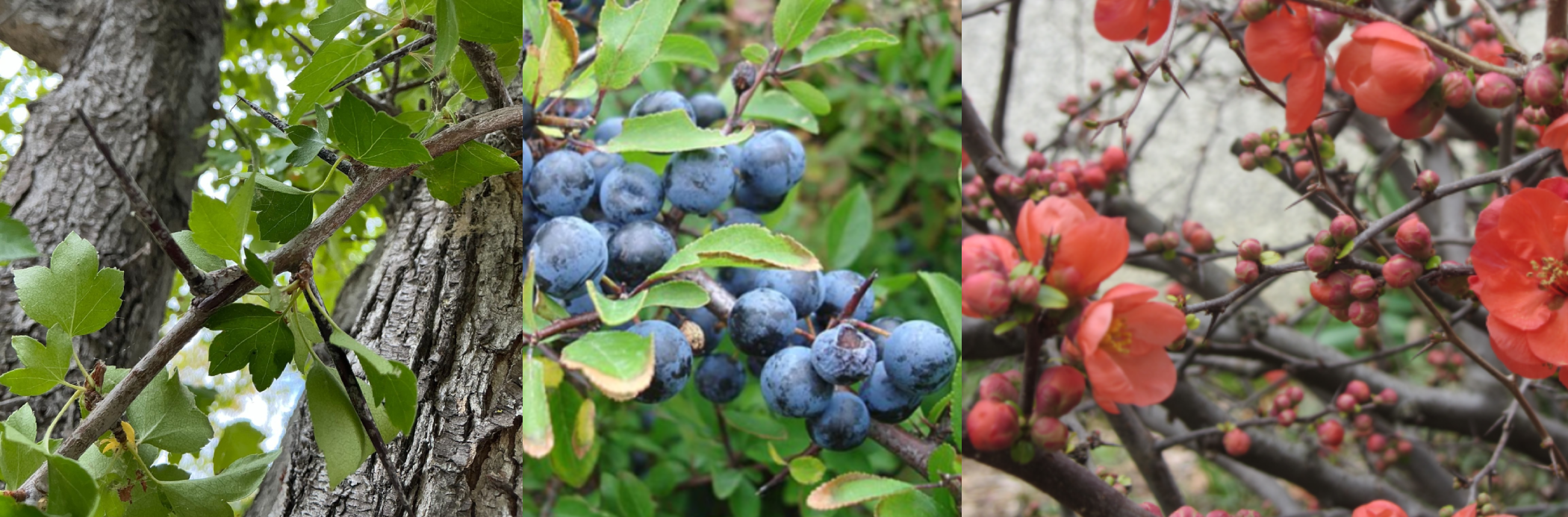
Thorns are modified branches. They arise from the axillary buds located between a leaf and the main stem or branch. Thorns may even behave like a normal axillary branch, sprouting leaves or flowers, with the tip of the branch ending sharply. Thorns are connected to the plant’s vascular system, so removing a living thorn harms the plant.
Spines
Spines are modified leaves, leaf parts, or leaf derivatives, including stipules and bracts. The most famous examples are cactus spines, which are what have become of the leaves. Ocotillo (see photo below) shares the American desert with cactus and is also fabulously spiny. Ocotillo spines, however, develop from the petiole and midrib of each leaf. They are left behind when the photosynthetic part of the leaf withers. New leaves develop in the axils above the old spines. Many species have spiny leaf projections or leaf margins, such as the hollyleaf cherry (Prunus ilicifolia), from the rose family, whose leaves are as spiny as those of its namesake holly. Most of the pointy projections of thistles (in the Asteraceae) are bonafide prickles, but those surrounding the flowerhead are spines that developed from the involucral bracts.
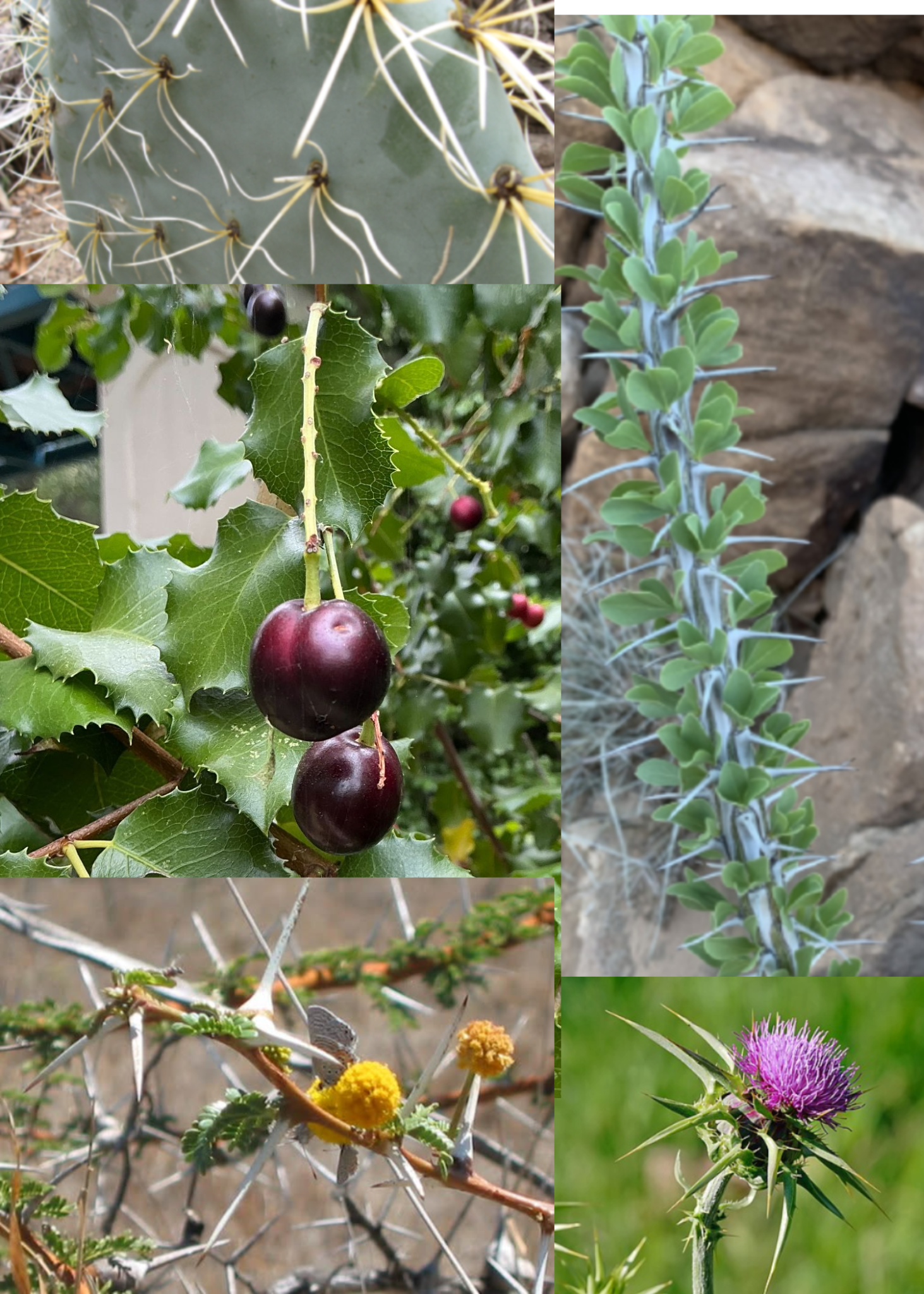
Spinescent structures protect plants from marauding animals, but they also affect a plant’s interaction with its abiotic environment. Spinescence of a flora tends to increase with aridity (13–21), highlighting a plant’s need for defense while conserving water. Biotic and abiotic pressures affect whether or not spinescence develops in a particular plant lineage, and what particular structure becomes sharp.
Gleanings and Baker's Dozen
Gleanings
- The JSTOR Daily online magazine is great, and they have a Plant of the Month essay feature! Every article is worthwhile. This month’s subject is serendipitously topical: the Himalayan blackberry. They tell the tale of how this particular Rubus species became wildly invasive in the Pacific Northwest.
- Ari Shaprio grows pears in bottles
- Jeremy Cherfas’s Eat This Newsletter is wonderful, as is his associated podcast. He recently highlighted the good work done by the Culinary Breeding Network, including their informative and beautifully illustrated zines, accessible crop science explainers. Their merch is fabulous.
- The Economist covers ube’s moment. Luigi Guarino contributed to the piece and compiled useful recent information about the purple yam on his excellent Agricultural Biodiversity Weblog.
- Coffee is threatened by climate change. Davide Castelvecchi writes about it at Nature news.
- Knowable magazine has two interesting recent interviews:
- The deep roots and fragile future of biodiversity, an interview with Sandra Diaz, by Valeria Román.
- Plants and their ants: When flora and fauna team up, an interview with Guillaume Chomicki, by Tim Vernimmen. Be sure to see our photo of one of the “ant plants,” Vachellia seyal, from Kenya.
- The Edge Effects podcast has two recent interviews worth listening to:
- Tina Hesman Saey at ScienceNews compares the history of Lysenkoism to the modern situation
- There is a Crop Wild Relatives Project.
- Some Kenyan farmers are returning to indigenous crops.
- The BBC’s The Food Chain podcast talks about potatoes.
- Books of interest
- Everything on the Wainwright Prizes longlists
- Bitter Honey by Jennie Durant. There is a thoughtful review in New Scientist.
- Dead Bees Still Sting: Tales of Life at the Edge of Nature by Susan Cormier
Baker’s Dozen
- Current Biology has a special issue on plant evolution with several papers that serve as cogent reviews on several lineages and the colonization of land by plants.
- Lee, J., Contreras, D. L., Saulsbury, J. G., Upchurch, G. R., & Looy, C. V. (2026). Diversification of angiosperm reproductive strategies predated the end-Cretaceous extinction. Science, 392(6805), 1380-1383. Fleshy fruits evolved earlier than we thought! The standard story has been that flowering plants made mostly small seeds and fruits until the asteroid hit at the end of the Cretaceous, after which, fruit size increased and fruit type became more diverse. Fossil evidence was strong for this general picture, and several non-exclusive hypothetical forces could have driven the size shift. But a team of paleobotanists working in what is now New Mexico have found a rich fossil flora from about 10 million years before the end of the Cretaceous that includes an array of fruit types, including some fleshy ones, averaging the “size of a blueberry.” The authors discuss the ecological conditions that may have supported larger fruits and some of the animals (mammals and dinosaurs) that could have dispersed them.
Baker’s Dozen
- Current Biology has a special issue on plant evolution with several papers that serve as cogent reviews on several lineages and the colonization of land by plants.
- The Journal of Integrative Plant Biology has a special issue entitled “Advances in Plant Natural Products: Biosynthesis, Bioengineering, and Applications.” The cover photo is a lovely assortment of Rubus fruit! Every article is interesting, and the cover is a reference to Zhang et al.’s article on the evolution of fruit characteristics in four Chinese bramble species.
- Lee, J., Contreras, D. L., Saulsbury, J. G., Upchurch, G. R., & Looy, C. V. (2026). Diversification of angiosperm reproductive strategies predated the end-Cretaceous extinction. Science, 392(6805), 1380-1383. Fleshy fruits evolved earlier than we thought! The standard story has been that flowering plants made mostly small seeds and fruits until the asteroid hit at the end of the Cretaceous, after which, fruit size increased and fruit type became more diverse. Fossil evidence was strong for this general picture, and several non-exclusive hypothetical forces could have driven the size shift. But a team of paleobotanists working in what is now New Mexico have found a rich fossil flora from about 10 million years before the end of the Cretaceous that includes an array of fruit types, including some fleshy ones, averaging the “size of a blueberry.” The authors discuss the ecological conditions that may have supported larger fruits and some of the animals (mammals and dinosaurs) that could have dispersed them.
- Strand, M. A., et al. (2026). The origin of the octoploid cloudberry (Rubus chamaemorus) genome is the result of multiple and complex polyploidization events. Journal of Heredity esag028. Another Rubus in recent papers. The strawberries from last month’s newsletter are also octoploid, unlike other species in their delicious genus.
- Sebastian, J., and K. A. Jensen. (2026). The geometry of Nature’s stingers is universal due to stochastic mechanical wear. PNAS e2526098123. We talk about plant “stingers” in this month’s Botany Lab of the Month. This paper considers them alongside their animal counterparts.
- Iqbal, S., et al. (2026). Hormonal Coordination of Fruit Development and Ripening: An Integrated Molecular Perspective. Applied Fruit Science 68: 155. A nice review.
- Gay, L., et al. (2026). Genetic and Morphological Diversity in Spontaneous Populations of Brassica rapa: How Do Feral Populations Differ From Wild Ones? Molecular Ecology 35: e70461.
- Souza Ferreira, R., Ringelberg, J.J., Hughes, C., Arlé, E., Wölke, F.J.R., Tomlinson, K.W. and Onstein, R.E. (2026), The complex interaction between mammalian herbivores, climate, soil and fire has shaped the evolution and distribution of plant spinescence across biogeographical realms. New Phytologist online early. We focus on prickles, spines, and thorns in this month’s Botany Lab of the Month. One extremely diverse group of spiky plants is the tropical mimosoid legumes (think acacias and mesquites), and this paper takes advantage of their diversity to ask what factors drive their defenses. Turns out it’s munching mammals, but not just modern ones––extinct herbivores were centrally important to the emergence of these plant defenses. This paper is open-source and has terrific visuals, too.
- Asare, E., et al. (2026). Genome‐wide molecular diversity analyses identify wild Cicer as reservoirs of variations for chickpea improvement. Genetic Resources and Crop Evolution 73: 227.
- An, K., et al. (2026) Plastome evolution and phylogenomics of Glycine (Leguminosae: Papilionoideae). BMC Plant Biology 26: 686. Shedding light on the complicated evolutionary history of the 29 species of wild soybeans.
- Khouri, C. K., et al. (2026). Grape (Vitis L.) biodiversity: Historical uses, current status, and future potential. Plants People Planet online early. A special collection of articles about grapevine biodiversity, including research, review, and methods and techniques.
- Wann, K., et al. (2026). Ethnobotanical and genetic assessments of Central American avocado landraces reveal novel sources of biodiversity and ancient migration patterns. Plants People Planet online early.
- Oldie but Goodie. June saw the loss of the eminent bird ecologist Robert Ricklefs. He was not afraid to tackle some of the biggest questions in ecology, occasionally collaborating with his botanist wife, Susan Renner. One of their most highly cited joint papers is Renner, S. S., & Ricklefs, R. E. (1995). Dioecy and its correlates in the flowering plants. American journal of botany, 82(5), 596-606. Indeed, it’s citation rate has barely slowed down in the 30 years since it was published. They conducted what was, at that time, the most comprehensive survey of plant families and genera to uncover associations between dioecy (separate plants making only ovule-bearing “female” or only pollen-bearing “male” flowers) and other traits. Among the strongest associations was with abiotic (non-animal) pollination, such as wind. Ricklefs’ longtime collaboration with Hong Qian and Yi Jin led to several illuminating papers comparing the woody plant ecologies of China and North America (see Qian, H., Y. Jin, & R. E. Ricklefs (2017)).
References
1. X.-F. Gao, X.-H. Xiong, D. E. Boufford, Y.-D. Gao, B. Xu, C. Zhang, Phylogeny of the Diploid Species of Rubus (Rosaceae). Genes 14, 1152 (2023).
2. T. Huang, J. Chen, K. E. Hummer, L. A. Alice, W. Wang, Y. He, S. Yu, M. Yang, T. Chai, X. Zhu, L. Ma, H. Wang, Phylogeny of Rubus (Rosaceae): Integrating molecular and morphological evidence into an infrageneric revision. TAXON 72, 278–306 (2023).
3. R. M. Reeve, Fruit histogenesis in Rubus strigosus. 1. Outer epidermis, parenchyma, and receptacle. Am. J. Bot. 41, 152–160 (1954).
4. Z. Liu, H. Ma, S. Jung, D. Main, L. Guo, Developmental Mechanisms of Fleshy Fruit Diversity in Rosaceae. Annu. Rev. Plant Biol. 71, 547–573 (2020).
5. Y. Xiang, C.-H. Huang, Y. Hu, J. Wen, S. Li, T. Yi, H. Chen, J. Xiang, H. Ma, Evolution of Rosaceae Fruit Types Based on Nuclear Phylogeny in the Context of Geological Times and Genome Duplication. Mol. Biol. Evol. 34, 262–281 (2017).
6. J. Zhou, M. Li, Y. Li, Y. Xiao, X. Luo, S. Gao, Z. Ma, N. Sadowski, W. Timp, C. Dardick, A. Callahan, S. M. Mount, Z. Liu, Comparison of red raspberry and wild strawberry fruits reveals mechanisms of fruit type specification. Plant Physiol. 193, 1016–1035 (2023).
7. M. A. Coyner, R. M. Skirvin, M. A. Norton, A. G. Otterbacher, Thornlessness in Blackberries: A Review. Small Fruits Rev. 4, 83–106 (2005).
8. A. A. Kellogg, T. J. Branaman, N. M. Jones, C. Z. Little, J.-D. Swanson, Morphological studies of developing Rubus prickles suggest that they are modified glandular trichomes. Botany 89, 217–226 (2011).
9. A. Khadgi, C. A. Weber, Morphological Characterization of Prickled and Prickle-free Rubus Using Scanning Electron Microscopy. HortScience 55, 676–683 (2020).
10. B. St. Aubin, T. Poorten, A. Fister, C. Ochsenfeld, J. Reiner, A. S. Castillo, R. Aryal, T. Brůna, O. Dudchenko, D. J. Sargent, D. Mead, M. Buti, A. Silva, M. Pham, D. Weisz, N. Bassil, H. Ashrafi, E. L. Aiden, N. Graham, D. Chauhan, E. Dean, W. Lowry, L. Redpath, P. Marri, S. Lawit, G. Pham, M. Worthington, B. C. Crawford, The control of prickle formation in Rubus. Plant Biology [Preprint] (2025). https://doi.org/10.64898/2025.12.22.695586.
11. C. A. Johns, A. Silva, T. M. Chizk, L. Nelson, J. R. Clark, R. Aryal, H. Ashrafi, E. Thompson, M. Hardigan, M. L. Worthington, Genetic control of prickles in tetraploid blackberry. G3 GenesGenomesGenetics 15, jkaf065 (2025).
12. V. M. Costa-Silva, I. De-Freitas, K. Del-Claro, X. Moreira, The complex dynamics of ant–plant mutualisms: exploring the roles of plant-provided resources and bird predation on ants in shaping plant performance. Ann. Bot. 136, 877–886 (2025).
13. P. S. L. Anderson, B. Zhang, K. Pan, B. Scott, A. Weber, Trade-offs in mechanical performance influence the diversity of fangs, stingers, and spines. Sci. Adv. 12, eaec5395 (2026).
14. K. Burns, Spinescence in the New Zealand flora: parallels with Australia. N. Z. J. Bot. 54, 273–289 (2016).
15. K. C. Burns, Are there general patterns in plant defence against megaherbivores? Biol. J. Linn. Soc. 111, 38–48 (2014).
16. T. Charles-Dominique, T. J. Davies, G. P. Hempson, B. S. Bezeng, B. H. Daru, R. M. Kabongo, O. Maurin, A. M. Muasya, M. van der Bank, W. J. Bond, Spiny plants, mammal browsers, and the origin of African savannas. Proc. Natl. Acad. Sci. 113, E5572–E5579 (2016).
17. R. S. Ferreira, J. J. Ringelberg, C. Hughes, E. Arlé, F. J. R. Wölke, K. W. Tomlinson, R. E. Onstein, The complex interaction between megaherbivores, climate and fire has shaped the evolution and distribution of plant spinescence across biogeographical realms. bioRxiv [Preprint] (2025). https://doi.org/10.1101/2025.07.02.662719.
18. J. Sebastian, K. H. Jensen, The geometry of Nature’s stingers is universal due to stochastic mechanical wear. Proc. Natl. Acad. Sci. 123, e2526098123 (2026).
19. K. W. Tomlinson, F. Yu, X. Wang, X. Yao, C.-C. Yu, T. Charles-Dominique, A. Anest, Y. Zhao, A. Prasetyo Agung, A. Adi Putra, R. S. Lapuz, T. Lefebvre, T. J. Davies, G. P. Hempson, B. S. Bezeng, B. H. Daru, R. M. Kabongo, O. Maurin, A. M. Muasya, M. van der Bank, W. J. Bond, M. Armani, U. Gélin, The macroecology of spines on woody plants. Biol. Rev. 100, 2396–2419 (2025).
20. H. Wang, R. Wang, S. P. Harrison, I. C. Prentice, Leaf morphological traits as adaptations to multiple climate gradients. J. Ecol. 110, 1344–1355 (2022).
21. X. Zhang, U. Gélin, R. A. Spicer, F. Wu, A. Farnsworth, P. Chen, C. Del Rio, S. Li, J. Liu, J. Huang, T. E. V. Spicer, K. W. Tomlinson, P. J. Valdes, X. Xu, S. Zhang, T. Deng, Z. Zhou, T. Su, Rapid Eocene diversification of spiny plants in subtropical woodlands of central Tibet. Nat. Commun. 13, 3787 (2022).