Gather and Sow: November 2026

The fourth Thursday in November is, of course, Plantsgiving, a day anticipated for weeks by botanists all across America. That’s when we transform a national day of gluttony into a challenge: put as many botanical ingredients on the table as possible. The winner is the host with the most taxonomically diverse menu (which almost always kicks off with a gin and tonic, netting a couple dozen plants right there).
We love a big branchy phylogenetic tree, but shouldn’t an appealing array of colors and structures count towards diversity, too? We would like to propose that this year’s Plantsgiving contest use a composite metric that accounts for pigments and plant parts. By that measure, you wouldn’t have to mail order obscure spices to compete. Vegetables as common as potatoes and sweet potatoes–stalwarts of the modern holiday menu–could earn you a lot of points if you took advantage of their anthocyanins and carotenoids. And given their importance to diets around the world, we believe that these humble tubers are especially deserving of our gratitude this time of year.
In this month’s Food for Thought we clarify the taxonomic identities of potatoes, sweet potatoes, and yams, and we say a few things about their marvelous colors. We also talk about the tubers that were actually present at the first Thanksgiving. Spoiler: not yams, sweet potatoes, or potatoes. Then, in Botany Lab of the Month, we take a close look at the morphology of potatoes and sweet potatoes. We conclude, as always, with a roundup of recent relevant media and journal articles in Gleanings and Baker’s Dozen. This newsletter will leave you empowered to amass tuber-related Plantsgiving points and transform dinner into a pedagogical opportunity if talk of politics threatens to ruin the meal.
Food for Thought
Tubers for Plantsgiving
It is traditional this time of year to trot out a statement about the difference between sweet potatoes and yams. To recap: yams (Dioscorea species) are (A) only distantly related to sweet potatoes (Ipomoea batatas); (B) very important in West African diets but hard to find in the US; and (C) starchy and may weigh (literally) as much as an adult human. In the face of so many annual admonitions, the continued use of both names must be based on more than ignorance. Maybe it’s just that people can’t give up the assonance of “candied yams.”
There seems to be less insistence on the difference between sweet potatoes and potatoes (Solanum tuberosum), but they are taxonomically and morphologically distinct, too. We’ll cover the taxonomy of all three tubers here, along with brief notes on domestication and pigments. We’ll tackle the morphology below in Botany Lab of the Month.
Sweet potatoes, potatoes, and yams were not part of the first Thanksgiving feast. We conclude this month’s Food for Thought with some notes about the tubers that actually were.
Tuber disambiguation
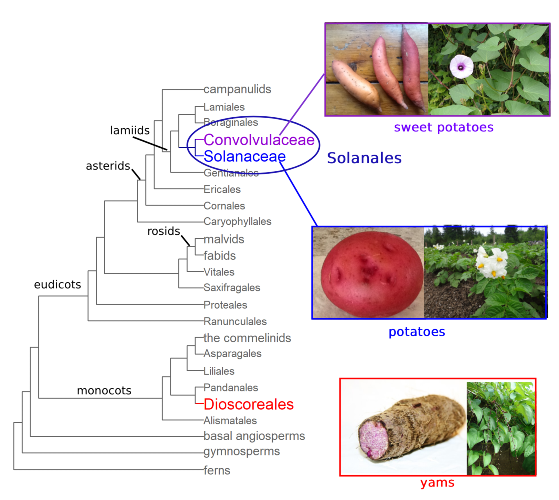
The evolutionary relationships among sweet potatoes, yams, and potatoes are shown on the phylogeny figure below. Yams are the most distant; they are monocots in the family Dioscoreaceae, in the order Dioscoreales. Sweet potatoes and potatoes are both in the eudicot order Solanales, but they are in different families within that order. Sweet potatoes are in the Convolvulaceae, the morning glory family. Potatoes are in the Solanaceae, the nightshades (see our essay on the botany of ratatouille, which includes the biogeographic and domestication history of the family and details about two other famous Solanum species: tomato and eggplant). A quick glance at the flowers of the three plants (shown on the figure below)–which are typical of flowers in the respective families–makes their taxonomic distinctions easy to understand.
Biogeography and domestication in brief
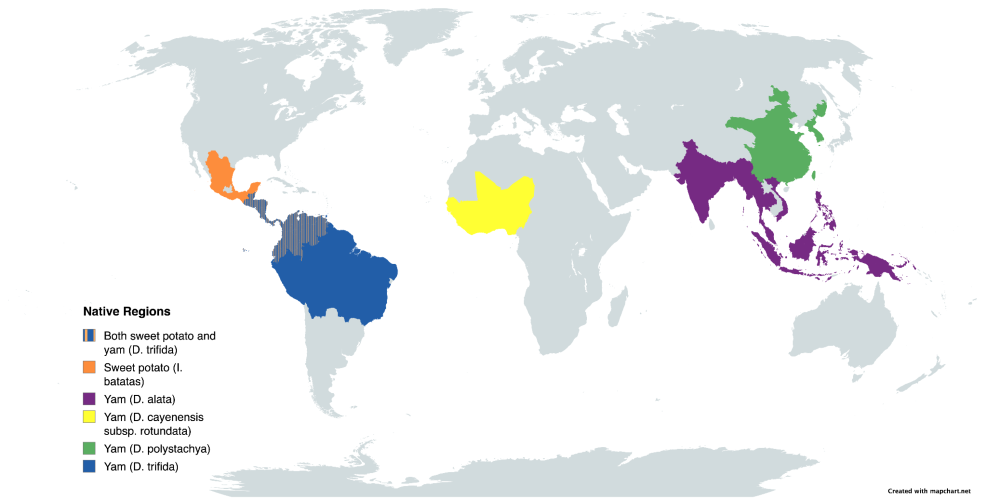
Domesticated potatoes, sweet potatoes, and yams collectively account for a significant fraction of the calories consumed around the world (4). In North America, potatoes rank behind only wheat and oils as a source of calories. Similarly, in West Africa, yams are the second most abundant non-grain food in the region (after cassava). These regional differences are a legacy of the domestication history of these starchy staples (see map figures below). Sweet potatoes and potatoes quickly became dietary staples in regions far from their geographical origins in the Americas, following their dispersal by transoceanic explorers (5–8) (although sweet potato seed capsules may have made the crossing from Central America to the Pacific Islands long before people made that trip themselves (9, 10)). Today, sweet potatoes are important mostly in West and Central Africa and in South East Asia. We will briefly cover the domestication details here.
Yams
The domestication story of yams is complicated because Dioscorea is a large genus (around 600 species), and the tubers of several Dioscorea species are used as food and medicine across much of the tropics and beyond (11–14). We’ll only mention a few of the most agriculturally important cultivated species here. White yam (D. rotundata) and yellow yam (D. cayenensis) form a species complex in the “yam belt” of West Africa, where these yams were domesticated and remain calorically significant (14–16). The water yam (D. alata) is also popular in Africa despite its origin in tropical Southeast Asia. D. alata is among the oldest domesticated plant species, one of the plants that Austronesian voyagers carried with them from island to island, possibly starting earlier than 10,000 years ago (16, 17). White and purple versions of D. alata are grown throughout the Pacific islands. Known by the Tagalog name “ube,” the purple versions have recently become globally popular (see “Colorful tubers” below). The Chinese yam (D. polystachya) is one of the few Dioscorea species domesticated in the temperate latitudes, in East Asia (18). The cush-cush yam (or “ñampín”, D. trifida) hails from the lowland forests of tropical South America. The antiquity of its domestication rivals that of its Asian canoe plant congeners (19).
Sweet potatoes
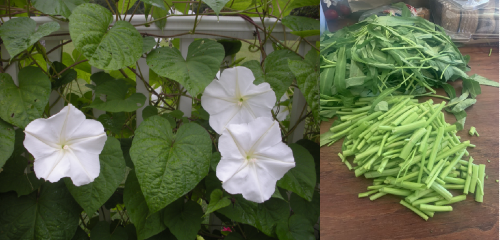
The genus Ipomoea shares some similarities with Dioscorea, in spite of their phylogenetic distance. It also boasts around 600 species, most of them tropical vines (20), with some species used variously as food or medicine. Unlike Dioscorea, some Ipomoea species are specifically grown for either their beautiful trumpet-shaped flowers, such as moonflowers and morning glories, or for their edible leaves (see photos below) (21–24). About two-thirds of Ipomoea species hail from the Americas (23), including the only commercially significant tuber crop in the genus: the sweet potato (Ipomoea batatas)--which also, incidentally, has edible leaves (25).
The American Ipomoea have a complicated history of whole genome duplication events, in which the number of chromosomes suddenly doubles or triples. The commercial sweet potato is hexaploid, meaning it has six chromosome copies, relative to the ancestral two (diploid). The most recent analyses suggest that It is the result of a natural hybridization event between two wild tropical American Ipomoea: a tetraploid I. batatas (four chromosome copies), and, presumably, a diploid ancestor of the modern Ipomoea aequatoriensis (5, 26). The formation of hexaploid I. batatas predates human occupation of the American tropics and occurred somewhere between the Yucatán Peninsula of Mexico and the Orinoco River in Venezuela (27–29).
Wild hexaploid I. batatas and its closest relatives create small storage roots (26, 27). The large, nutritious tubers that we know and love are the product of targeted selection and plant breeding during domestication, a process that started 5,000-10,000 years ago (5, 27).
Potatoes
With nearly 1300 species, Solanum is yet another large, cosmopolitan genus (30, 31). Like Ipomoea, most Solanum species are American, including the wild relatives of the two most economically important members of the genus: tomatoes (S. esculentum) and potatoes (S. tuberosum). Eggplants are also Solanum and are native to Asia (32–34). The 100+ wild species of tuber-forming Solanum–the cultivated potato and its numerous wild relatives–are all in their own clade, called the petota clade. Most of them are in the Andes, as is the location of potato’s domestication in southern Peru (see the map below). Like yam and sweet potato, the domestication process that brought potatoes under cultivation began 6,000 to 10,000 years ago (35, 36).
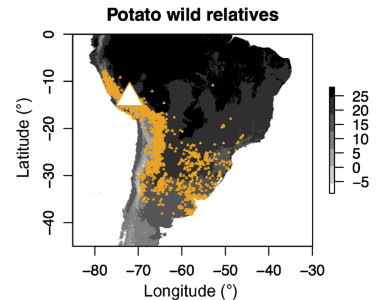
Unlike sweet potato’s wild relatives, most of the members of the petota clade make respectable tubers (36, 37). Domestication made potato tubers bigger and tastier, but the wild versions are recognizably potatoes (38). Life in the high Andes is hard (39), and underground storage organs allow plants to survive the harsh winters, a strategy called geophytism (Some papers about geophytes have clever titles: “Get the shovel….” (40); “Tuber or not tuber…” (41)). It’s a strategy that Andean species from several plant families have landed on independently, and potatoes are only one of several edible tuberous species that were domesticated in South America (42–44).
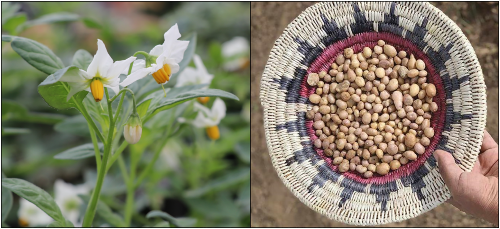
Potatoes were grown in close contact with their tuberous wild relatives at the time of domestication and after (as shown in the map figure above) (35–38, 47). Domesticated potatoes started as hybrids, a genetic mashup of the wild potatoes near Lake Titicaca. Wild species continued to genetically contribute to cultivated potatoes throughout the protracted domestication period, especially as the practice of potato cultivation gained popularity and spread. Potato’s wild relatives exist across a wide range of habitat types and climatic regimes. Genetic introgression from wild relatives enabled cultivated potatoes to adapt to local conditions (35).
Colorful tubers
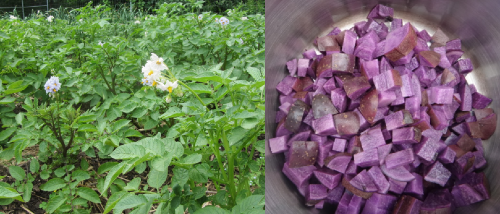
Ube is having a moment. “Ube” is the Tagalog name for Dioscorea alata in the Phillipines, near the species’ origin (48). White versions of D. alata tubers exist and are important food sources throughout the tropical Pacific, but the purple versions have become wildly popular all over the world in recent years. Not only are Filipino desserts featuring bright purple ube puree gaining ground, but powdered ube is showing up in unexpected places, like the coffee mix in the picture below.
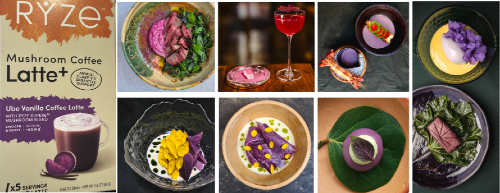
As with purple versions of potatoes (50–52) and sweet potatoes (53, 54), the rich color of ube is from anthocyanins (55–57). There are several classes of anthocyanins (and hundreds of variants) ranging in color from red to purple to blue, and each is the product of a long branching chain of chemical transformations. Every step requires the action of a different enzyme, and particular enzymes can shift the pathway towards one or another class of anthocyanin. With so many molecular players involved, plants have numerous points where they can fine-tune the process and control precisely when and where and what kind of anthocyanin is produced. In sweet potatoes, members of one family of genes (MYB transcription factors) are involved in boosting anthocyanin production in different parts of the plant, while variation in the genes coding for individual enzymes can influence which pigments are produced (53, 58). And through so-called epigenetic regulation, a plant can express different sets of pigments within the same tissue. One striking example is Purple Viking potatoes, which are blotched with dark purple and red patches because modifications to the DNA (methylation) in some areas of the skin change gene expression locally (59).
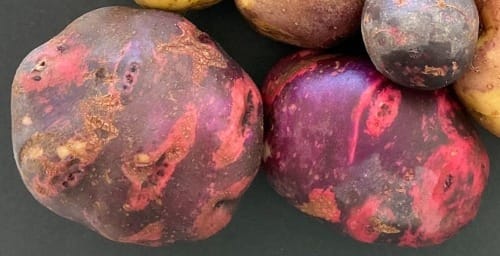
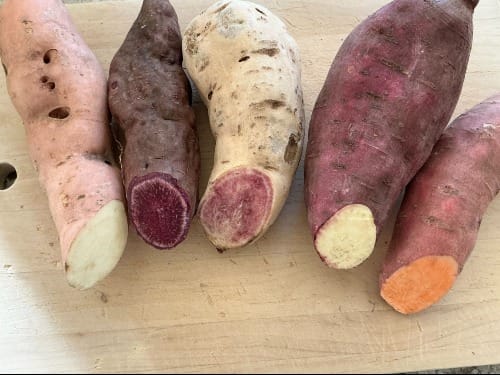
Purple tubers tend to go with purple flowers in both potatoes and sweet potatoes, partly because of some shared genetic control. However, it is also possible for plants to mix and match the pigmentation of their different parts. Depending on the variety, sweet potatoes show nearly all the possible color combinations of flesh and skin (see photo). Humans have noticed and selected for these visually striking contrasts in pigmentation, and cooks can take advantage of them. Fortunately, the classes of anthocyanin that are most common in sweet potatoes are stable to high heat (53), so their bright colors will survive roasting or steaming.
The “candied yams” that will populate Thanksgiving dinners in the U.S. in a few weeks are probably made from orange-fleshed sweet potatoes, often sold as “garnet yams” in grocery stores. The carotenoid pigments that are responsible for the signature color are dietary precursors for the synthesis of Vitamin A. Because carotenoid-rich sweet potatoes can be agriculturally productive across a wide swath of tropical and temperate latitudes, there is hope that expansion of this crop can combat Vitamin A deficiency, especially in the most impoverished areas of the globe (60, 61). Carotenoids are present in potatoes (62, 63) and yams (64) as well.
It might seem strange that plants make such vibrantly colored tubers, only to bury them underground. The colors of flowers and fruits, after all, help attract animal pollinators and seed dispersers. Plants imbue their tubers with pigments because pigments do much more for plants than just impart color. Anthocyanins help plants cope with environmental stress (65) and are powerful antioxidants, both inside plants and the animals that eat them–including us (50, 66). Carotenoids also serve numerous physiological roles and are chemical precursors for other compounds that plants make (62, 67). Even if tuber flesh doesn’t appear to be particularly colorful, pigments are present in low, but physiologically significant, concentrations (60, 61). Plant pigments also aid in the defense against pests and pathogens (68–72), which is why they are often most concentrated in tuber skin. Be sure to read our April newsletter, in which we expound on plant pigments.
The original Thanksgiving tubers
The first Thanksgiving in 1621 was a feast shared by the Wampanoag people and the Plymouth colonists (73, 74). They ate neither sweet potatoes nor potatoes. Nor yams. Although sweet potatoes and potatoes (and some yams) are from the Americas, they had not yet made their way to the Wampanoag Nation. Other crops domesticated in the warmer latitudes of the Americas had migrated to the Northeast before the seventeenth century. Maize, squash, and beans–the “Three Sisters”, all of Mesoamerican origin–were established staples. For more about Wampanoag agriculture, listen to Jeremy Cherfas’s recent interview with Mike Wise about Wise’s new book Native Foods: Agriculture, Indigeneity, and Settler Colonialism in American History.
Potatoes eventually arrived on the Eastern Seaboard by way of European colonists, but years after the Mayflower had sailed (75). Had the Pilgrims landed in what is now the southeastern United States, they might have tasted sweet potatoes grown by some indigenous groups there, but there are no reports of the Wampanoag cultivating Ipomoea (76). Sweet potatoes eventually came to the northeastern colonies by the same circuitous route as potatoes–through subsequent European colonists who brought them to northeastern North America only after they gained popularity abroad.
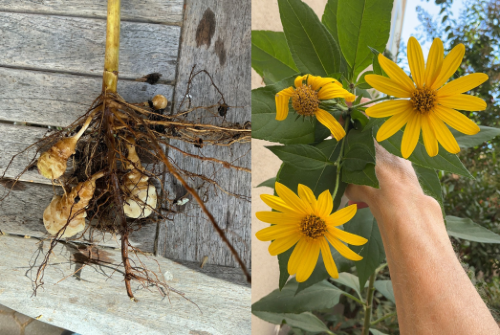
Tubers (or another type of subterranean starchy organ) were likely present at the first Thanksgiving, in the form of local species. The Wampanoag harvested, and possibly cultivated, several wild tuberous plants, including: groundnuts, also called hopniss (Apios americana), a leguminous tuber; sunchokes, which are also weirdly called Jerusalem artichokes (Helianthus tuberosus); and the rhizomes of aquatic cattails (Typha spp.) and water lilies (Nymphaea odorata) (77–82). Sunchokes remain a commercial crop (83, 84), and groundnuts maybe should be (79, 81, 85–90) (see the map with sunchoke and groundnut occurrence data below).
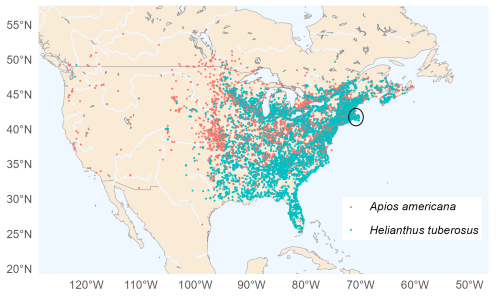
Plantsgiving tally
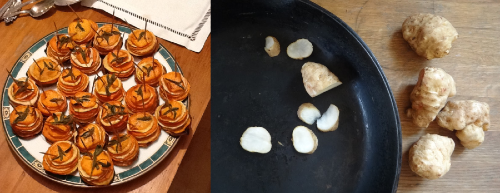
In our view, tuber-related Plantsgiving points should be awarded for: (A) incorporating both potatoes (Solanum tuberosum) and sweet potatoes (Ipomoea batatas) into your menu (the easy layup); (B) including multiple colors of each tuber type, bonus points if one of them is purple; (C) finding and cooking an actual yam (Dioscorea spp.) and getting really pedantic about it at dinner; and (D) adding tubers indigenous to northeastern North America. You can probably find sunchokes at a grocery store. You’ll have to dig your own wild groundnuts, but they’re apparently sweeter in November. If you wade out into a shallow pond to dig up water lily and cattail rhizomes at this time of year, you get all the points. Bonus points for adding other “root vegetables,” like the parsnips–a legitimate taproot–in Katherine’s scrumptious appetizers in the photo below.
Botany Lab of the Month
Getting to the root of the problem
Potatoes and sweet potatoes, the two “root vegetables” on the menu for a typical American Thanksgiving dinner, are both tubers, but only one of them is a root. Both are starchy underground storage structures that bear the buds of new shoots, but they differ in anatomical origin and bud arrangement. Sweet potatoes (Ipomoea batatas) are properly called root vegetables because they are root tubers, derived from roots. Potatoes (Solanum tuberosum) are improperly called root vegetables because it would be confusing to call them “stem vegetables.” They are, however, stem tubers, as we explain below.
If either or both of these tubers are in your kitchen, you’ll be able to follow along with our observation notes to see just how different these earthy vegetables are when you look closely. If you happen to get hold of an actual yam (Dioscorea spp.), try to match up its structure with the potato observation notes. It is also a stem tuber (93, 94).
Sweet potato observation notes
Admittedly, sweet potatoes do not look like roots. They are not tap roots, fat at the top and tapering to the bottom like carrots. A sweet potato plant makes tubers by thickening the tips of its slender lateral roots, such that both ends come to a point, making it hard to tell which end is which. Fortunately, the tuber gives clues to its orientation via the tiny side roots emerging from wide horizontal scars in its skin. They will usually emerge towards the distal end of the tuber, the end growing away from the rest of the plant. But because the tuber lies horizontally in the soil and the side roots quickly reorient themselves to grow downwards, even this clue is not reliable.
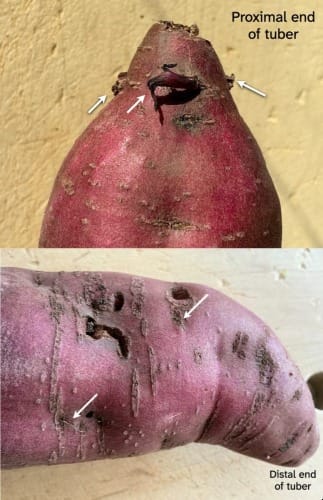
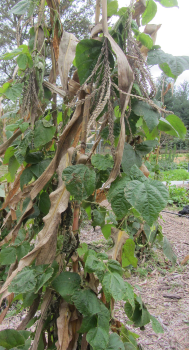
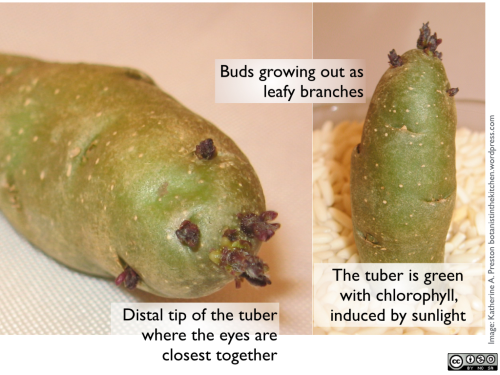
A less common but surer hint can be found at the other (proximal, or top) end, where some tubers will have developed tiny buds. These buds will develop into “slips,” or new shoots. Sweet potato leaves are edible and nutritious (25), unlike the aerial parts of potato (see the green potato photo below).
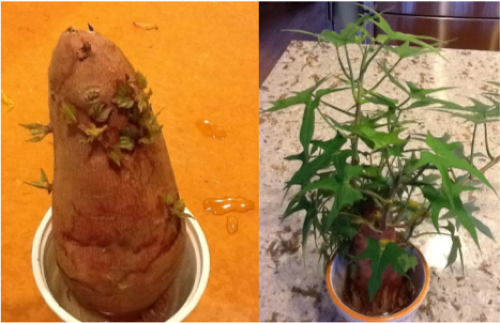
The inside of a sweet potato is also worth investigating before you cook it. It is a storage organ, and like many other storage tissues, it is composed of large cells filled with sugars and starch. Orange varieties are also full of the pigment beta carotene, a precursor to vitamin A. One smallish tuber (100g) provides a day’s worth of vitamin A and a good dose of vitamin C and several B vitamins to get you through the holiday stress. Purple varieties are less common on holiday tables, but you might invite them to the party anyhow because of their anthocyanins, which are powerful antioxidants.
Sweet potatoes are also shot through with laticifers, basically long narrow cells full of milky sap called latex. If you squeeze a sweet potato tuber right after slicing off an end, you will bring the sap to the surface. This is the same kind of sap visible on the cut surface of a dandelion stem or a freshly cut head of lettuce. The chemical composition of the latex varies across plant groups, but it serves the same purpose for all of them: defense against herbivores and pathogens (95, 96). The ancient Egyptians, by the way, had curious ideas about lettuce sap. Feel free to share about those at Thanksgiving dinner.
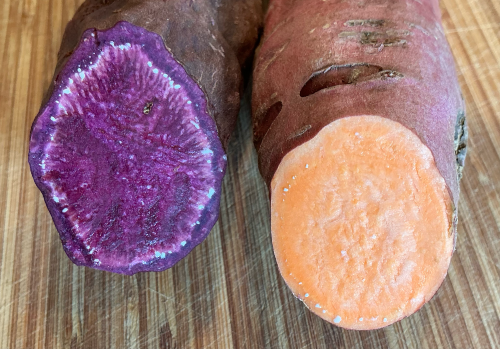
Because these laticifers are associated with the vascular tissue (veins), they allow you to see that sweet potatoes develop randomly scattered clusters of veins, as well as a ring near the outside of the tuber and a large cluster in the center. The veins are also associated with long, tough fibers, which support and reinforce the veins. Katherine’s grandmother used to remove the fibers from mashed sweet potatoes by beating them with a mixer. The fibers wrap themselves around the beaters, leaving behind a smooth fluffy puree.
Potato Observation notes
Potato tubers do not look like most stems––they hardly resemble the above-ground stems of a potato plant––but they do have a stem’s fundamental structure. The eyes are the most conspicuous morphological clue. If you compare each end of a potato you will see that one (the proximal end) bears the stump of the stolon (horizontal stem) that connected it to its mother plant while the other (the distal end) is tightly packed with small eyes that spiral out and around the potato. Each eye contains a cluster of buds subtended by a semicircular leaf scar. The leaf in question was vestigial and translucent, and a remnant of it may still be present on your potato. Eyes are most easily visible on the “waxy” potato varieties (like Yukon Golds), which have less starch overall and a different ratio of types of starch than the “starchy” varieties (like Russets)–see Katherine’s essay on potato starchiness for details.
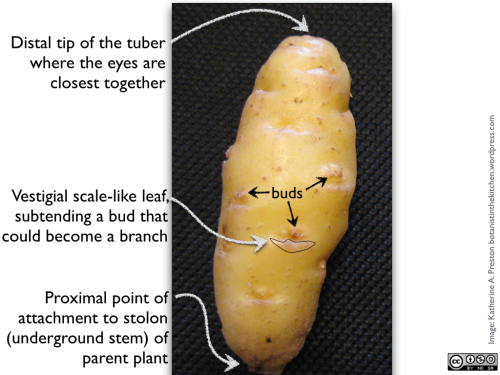
Just as leaves and their associated branches are not randomly arranged on a stem, potato eyes are not scattered haphazardly over the tuber. Instead, they lie in a spiral around the stem. This pattern is less obvious along the fat middle part of the potato, but it can be seen clearly at the distal end where the eyes are close together. Trace the spiral of eyes from the distal tip of the stem. Start by choosing a young eye close to the center of the tip as a starting point. Because new eyes are produced at the tip, the eyes are progressively older the farther they are from that tip. Now locate the next, slightly older, eye on the tuber. Keep moving from eye to eye around the stem, each time choosing the next one in the age sequence. In Katherine’s video shown below, the spiral runs counter-clockwise, but your particular spud could run clockwise. If you want to know more about spiral arrangements of plant parts, we recommend the excellent book Do Plants Know Math.
Each eye of the potato is a node on the stem tuber capable of giving rise to a branch, which could eventually emerge from the soil and become a green, leafy shoot. A growing potato shoot, just like a sweet potato shoot, fuels its early growth by drawing carbohydrates and other nutrients from the parent tuber, leaving the older tuber withered and empty. The new potato shoot meanwhile generates its own set of roots and underground stems (stolons) tipped with tubers. The new photosynthesizing shoot sends sucrose down to its tubers, where the sugar is converted to energy-rich starch and layered into pearl-like granules inside amyloplasts in the tuber’s storage cells. Each generation’s tubers thus give rise to the next generation of leafy shoots.
Grateful for plant dormancy
Our human ancestors have most likely been eating tubers for millions of years. These starchy caloric lumps are easy to locate and not too difficult to harvest with the right tools, and once humans could use fire to cook them, they would have been highly digestible (98). But of course tuberous structures evolved long before we did as a way for plants to store the resources that will fuel growth when conditions permit, pushing new shoots above ground or facilitating lateral belowground expansion. Humans have learned to exploit both phases of a tuber’s life: we eat them when they are dormant and full of stored nutrients, and we propagate them when it is time for their buds to sprout.
Tubers, be they stem or root, are not the only types of starchy underground storage structures. Taproots, hypocotyls (fused taproot and stem), bulbs, corms, and rhizomes all help plants live to sprout another day. There are edible examples of all of these (see Jeanne’s essay on “root vegetables”).
We should all add plant dormancy to the list of things we are thankful for this Thanksgiving and serve up some gratitude au gratin.
Gleanings and Baker's Dozen
Gleanings
Abdul El-Sayed visited an apple orchard, thought deeply about apple varieties, and told everyone all about it. How do we like them apples? They’re fine.
- Instead of watching football on Plantsgiving, try playing Potato Expedition: 1946, the new online game from Abertay University and the James Hutton Institute. It simulates the South American expedition undertaken by Jack Hawkes to find blight resistant potatoes. Luigi has all the details at Agrobiodiversity Weblog. Luigi also brings attention to the USDA’s cool new hemp germplasm collection and an associated podcast.
- Ancient people relied on genetic variation already present in wild plants to domesticate crops like rice and corn”: a wonderful essay by Ornob Alam, a postdoc in the Purugganan lab.
- Sorghum risotto on NPR
- Recent podcast episodes of note:
- Gastropod on foraging; and vegan “milks”
- The In Defense of Plants Podcast has two episodes on hybrid blueberries: Part 1; Part 2.
- Cassandra Quave’s Foodie Pharmacology Podcast is always worth a listen. Her two most recent interviews are particularly relevant to our interests:
- We mentioned this above in Food for Thought: Jeremy Cherfas’s recent interview with Mike Wise about Wise’s new book Native Foods: Agriculture, Indigeneity, and Settler Colonialism in American History is worth the listen. We particularly enjoyed Wise’s description of the Wampanoag practice of using kernel color to dictate their corn variety planting schedule.
- Longwood Gardens in Maryland has written up some of the horticultural genius behind their Chrysanthemum Festival. There’s a little video, too. These blooms are nice visuals to keep in mind while reading the new Chrysanthemum evolution paper that we mention below.
- Black walnuts in the New York Times. Be sure to revisit Katherine’s essay on green walnuts.
- The artists who grow their own materials in Tmagazine. We henceforth only want to wear silk grown by silkworms that listen to Lauryn Hill. Also in Tmagazine: the flowers associated with death.
- The new essay collection Plant Humanities looks compelling. Contributor Giovanni Aloi makes a case for it on Instagram. His book Lawn also looks compelling.
- Is “foraging influencer” still a career option?
Baker’s Dozen
- Gordon, J. D., et al. (2026) Black Death Land Abandonment Drove European Diversity Losses. Ecology Letters 29: e70325.
- Two reviews on the nuts and bolts:
- Li, P., et al. (2026) A near-complete genome assembly of onion resolves its genomic architecture, origin, and evolution. Plant Communications 7: 101825.
- Gati, F. (2026) Conservation dilemmas: Xylella fastidiosa and the future(s) of olive farming. Agriculture and Human Values 43: 162(2026).
- José de Jesús Sánchez González, et al. (2026) Evolutionary history and taxonomy of the genus Zea. American J. Botany 113: e70277.
- Potato papers:
- Sinha. D., et al. (2026) Genetic and molecular networks mediating potato tuber development. New Phytologist 252: 1768-1786.
- Strömvik, M. V., and H. H. Tai. (2026) Petota (potatoes) evolved from fortuitous hybridization between Tomato and Etuberosum ancestors. Molecular Plant 19: 16-18.
- Brose, J., et al. (2026) Co-option of ancestral stem regulators drove recurrent evolution of underground storage organs. PNAS 123: e2606323123.
- Zhao, B., et al. (2026) Stress Interruption of Potato Tuber Initiation: Production, Transport, Sensitivity, and the Cell Types Where It Happens. Agronomy 16: 2160.
- Zhang, Z., et al. (2026) Metabolomic remodeling and genetic regulation in potato tubers during domestication. Molecular Plant 19: 328-345.
- Helianthus papers, relevant to the native tubers section of Food for Thought
- Cao, Y., et al. (2026) Plant domestication revisited: Genomic insights into origins, mechanisms, and convergent evolution. iScience 29: 114062.
- Hodžić, M. M. (2026) Plant Species Mentioned in Abrahamic Scriptures: Implications for Biodiversity and Traditional Agriculture and Horticulture. SilvaWorld 5.
- Yuan, C., et al. (2026) The origin and domestication of modern cultivated Chrysanthemum × morifolium. Nature Plants 12: 1725-1740.
- Kinlock, N. L., et al. (2026) WorldCuP: A database of checklists documenting the World's Cultivated Plants and their distributions. Plants People Planet online early.
- The Journal of Experimental Botany has a special issue: Plants and low oxygen: from sensing and signalling to ecological adaptation and crop resilience.
- Oldie but Goodie: Turner, N. J., M. Boelscher Ignace, R. Ignace (2000) Traditional Ecological Knowledge and Wisdom of Aboriginal Peoples in British Columbia. Ecological Applications 10: 1275-1287. Thanksgiving draws our minds towards the indigenous foodways of the Americas. No scholar has done more than Nancy Turner to record the ethnobotany of First Nations peoples in Northwestern North America and to make a case for the necessity of traditional ecological knowledge. The selected paper is just one of many that we could have chosen. We are in awe of her 2014 two-volume magnum opus Ancient Pathways, Ancestral Knowledge: Ethnobotany and Ecological Wisdom of Indigenous Peoples of Northwestern North America (McGill-Queen’s University Press).
References
1. Angiosperm Phylogeny Website. https://www.mobot.org/mobot/research/apweb/.
2. R Core Team, R: A language and environment for statistical ## computing., version R version 4.5.0 (2025-04-11 ucrt), R Foundation for Statistical Computing (2025); https://www.R-project.org/.
3. E. Paradis, J. Claude, K. Strimmer, APE: Analyses of Phylogenetics and Evolution in R language. Bioinformatics 20, 289–290 (2004).
4. “Food balance sheets 2010–2023” (FAO, 2025); https://doi.org/10.4060/cd7162en.
5. S. Wu, H. Sun, X. Zhao, J. P. Hamilton, M. Mollinari, G. D. S. Gesteira, M. Kitavi, M. Yan, H. Wang, J. Yang, G. C. Yencho, C. R. Buell, Z. Fei, Phased chromosome-level assembly provides insight into the genome architecture of hexaploid sweetpotato. Nat. Plants 11, 1951–1959 (2025).
6. T. Denham, Ancient and historic dispersals of sweet potato in Oceania. Proc. Natl. Acad. Sci. 110, 1982–1983 (2013).
7. R. M. Gutaker, C. L. Weiß, D. Ellis, N. L. Anglin, S. Knapp, J. Luis Fernández-Alonso, S. Prat, H. A. Burbano, The origins and adaptation of European potatoes reconstructed from historical genomes. Nat. Ecol. Evol. 3, 1093–1101 (2019).
8. D. Ríos, A. Devaux, J. I. Ruiz de Galarreta, Ancient Potato Varieties of the Canary Islands: Their History, Diversity and Origin of the Potato in Europe. Potato Res. 67, 963–994 (2024).
9. J. Temmen, A. Montenegro, S. Juras, J. S. Field, J. DeGrand, Floating the sweet potato to polynesia: Considering the feasibility of oceanic drift for the prehistoric introduction of the sweet potato (Ipomoea batatas) to Pacific Islands. Quat. Sci. Rev. 295, 107709 (2022).
10. P. Muñoz-Rodríguez, T. Carruthers, J. R. I. Wood, B. R. M. Williams, K. Weitemier, B. Kronmiller, D. Ellis, N. L. Anglin, L. Longway, S. A. Harris, M. D. Rausher, S. Kelly, A. Liston, R. W. Scotland, Reconciling Conflicting Phylogenies in the Origin of Sweet Potato and Dispersal to Polynesia. Curr. Biol. 28, 1246-1256.e12 (2018).
11. S. Kumar, G. Das, H.-S. Shin, J. K. Patra, Dioscorea spp. (A Wild Edible Tuber): A Study on Its Ethnopharmacological Potential and Traditional Use by the Local People of Similipal Biosphere Reserve, India. Front. Pharmacol. 8 (2017).
12. J. E. Obidiegwu, J. B. Lyons, C. A. Chilaka, The Dioscorea Genus (Yam)—An Appraisal of Nutritional and Therapeutic Potentials. Foods 9, 1304 (2020).
13. B. Padhan, D. Panda, Potential of Neglected and Underutilized Yams (Dioscorea spp.) for Improving Nutritional Security and Health Benefits. Front. Pharmacol. 11 (2020).
14. Y. Sugihara, A. Kudoh, M. T. Oli, H. Takagi, S. Natsume, M. Shimizu, A. Abe, R. Asiedu, A. Asfaw, P. Adebola, R. Terauchi, “Population Genomics of Yams: Evolution and Domestication of Dioscorea Species” in Population Genomics: Crop Plants, O. P. Rajora, Ed. (Springer International Publishing, Cham, 2024; https://doi.org/10.1007/13836_2021_94), pp. 837–864.
15. J. E. Obidiegwu, E. M. Akpabio, A. U. Okere, C. A. Chilaka, The Ecology of Yam Food Culture in the Yam Belt of West Africa. Culture 2, 6 (2026).
16. M. B. K. Tareen, N. Saeed, M. Sultan, X. Chen, J. Li, S. Yan, Yam as functional food: bioactive properties, health benefits, and applications. Food Nutr. Health 2, 16 (2025).
17. R. N. Alfiani, A. W. Indrianingsih, T. Wiyono, Purple yam and food application: a review of potential functional food development. Bioact. Carbohydr. Diet. Fibre 36, 100559 (2026).
18. W. Feng, Z. Zhang, J. Zhang, P. Nan, Z. Song, W. Zhang, J. Yang, Y. Wang, Comparative plastomic analysis of cultivated Dioscorea polystachya and its close relatives provides insights on the inter- and intraspecific phylogenies and potential wild origins of domestication. BMC Plant Biol. 24, 1255 (2024).
19. D. A. da Silva Souza, D. R. da Bandeira, N. Peroni, Yams (Dioscorea spp.) in shellmounds and swiddens: ancient history in Babitonga Bay, Santa Catarina State, southern Brazil. J. Ethnobiol. Ethnomedicine 20, 13 (2024).
20. M. Meira, E. P. da Silva, J. M. David, J. P. David, Review of the genus Ipomoea: traditional uses, chemistry and biological activities. Rev. Bras. Farmacogn. 22, 682–713 (2012).
21. Y. Hao, W. Bao, G. Li, Z. Gagoshidze, H. Shu, Z. Yang, S. Cheng, G. Zhu, Z. Wang, The chromosome-based genome provides insights into the evolution in water spinach. Sci. Hortic. 289, 110501 (2021).
22. A foundation monograph of Ipomoea (Convolvulaceae) in the New World. Phytokeys 143, 1–823 (2020).
23. P. Muñoz-Rodríguez, T. Carruthers, J. R. I. Wood, B. R. M. Williams, K. Weitemier, B. Kronmiller, Z. Goodwin, A. Sumadijaya, N. L. Anglin, D. Filer, D. Harris, M. D. Rausher, S. Kelly, A. Liston, R. W. Scotland, A taxonomic monograph of Ipomoea integrated across phylogenetic scales. Nat. Plants 5, 1136–1144 (2019).
24. A. R. G. Simões, G. Huerta-Ramos, A. L. C. Moreira, J. R. L. Paz, J. G. Allende, P. Pisuttimarn, P. Rattanakrajang, J. C. J. Barbosa, R. Simão-Bianchini, R. K. Kojima, C. P. Paixão, M. Declercq, S. P. Kagame, J. A. Luna, M. R. Pace, C. Alcantara, B. D. Williams, L. O. Duque, V. Gowda, V. B. Shimpale, L. Eserman, Sweet potato, morning glories, bindweeds: an overview of Convolvulaceae. Rheedea 34, 267–308 (2024).
25. M. Sun, X. Jiang, Y. Ma, L. Wang, M. Zhu, J. Xing, J. Hong, From Source to Utilization: A Review of Influencing Factors and Safety Assessment for High-Value Utilization of Sweet Potato (Ipomoea batatas L.) Leaves. Foods 15, 2563 (2026).
26. M. Yan, M. Li, Y. Wang, X. Wang, M.-H. Moeinzadeh, D. G. Quispe-Huamanquispe, W. Fan, Y. Fang, Y. Wang, H. Nie, Z. Wang, A. Tanaka, B. Heider, J. F. Kreuze, G. Gheysen, H. Wang, M. Vingron, R. Bock, J. Yang, Haplotype-based phylogenetic analysis and population genomics uncover the origin and domestication of sweetpotato. Mol. Plant 17, 277–296 (2024).
27. Q. Liu, Improvement for agronomically important traits by gene engineering in sweetpotato. Breed. Sci. 67, 15–26 (2017).
28. B. Goettsch, T. Urquiza-Haas, P. Koleff, F. Acevedo Gasman, A. Aguilar-Meléndez, V. Alavez, G. Alejandre-Iturbide, F. Aragón Cuevas, C. Azurdia Pérez, J. A. Carr, G. Castellanos-Morales, G. Cerén, A. R. Contreras-Toledo, M. E. Correa-Cano, L. De la Cruz Larios, D. G. Debouck, A. Delgado-Salinas, E. P. Gómez-Ruiz, M. González-Ledesma, E. González-Pérez, M. Hernández-Apolinar, B. E. Herrera-Cabrera, M. Jefferson, S. Kell, R. Lira-Saade, F. Lorea-Hernández, M. Martínez, A. Mastretta-Yanes, N. Maxted, J. Menjívar, M. de los Ángeles Mérida Guzmán, A. J. Morales Herrera, O. Oliveros-Galindo, M. A. Orjuela-R., C. M. Pollock, M. Quintana-Camargo, A. Rodríguez, J. A. Ruiz Corral, J. de J. Sánchez González, G. Sánchez-de la Vega, M. Superina, W. Tobón Niedfeldt, M. F. Tognelli, O. Vargas-Ponce, M. Vega, A. Wegier, P. Zamora Tavares, R. K. B. Jenkins, Extinction risk of Mesoamerican crop wild relatives. Plants People Planet 3, 775–795 (2021).
29. P. Muñoz-Rodríguez, T. Wells, J. R. I. Wood, T. Carruthers, N. L. Anglin, R. L. Jarret, R. W. Scotland, Discovery and characterization of sweetpotato’s closest tetraploid relative. New Phytol. 234, 1185–1194 (2022).
30. P. W. Moonlight, L. Baldaszti, D. Cardoso, A. Elliott, T. Särkinen, S. Knapp, Twenty years of big plant genera. Proc. R. Soc. B Biol. Sci. 291, 20240702 (2024).
31. L. Baldaszti, T. Särkinen, N. Brummitt, D. Cardoso, S. Knapp, D. C. Zuanny, P. W. Moonlight, On the geography of big plant genera. Ann. Bot., mcaf159 (2025).
32. M. B. Gevez, E. Alas, S. Güney, A. Balkaya, Comparison of Eggplant Genotypes and Their Wild Solanum Relatives in Terms of Root System Architecture. Int. J. Agric. Environ. Food Sci. 9, 716–724 (2025).
33. A. Page, J. Gibson, R. S. Meyer, M. A. Chapman, Eggplant Domestication: Pervasive Gene Flow, Feralization, and Transcriptomic Divergence. Mol. Biol. Evol. 36, 1359–1372 (2019).
34. E. Gagnon, R. Hilgenhof, A. Orejuela, A. McDonnell, G. Sablok, X. Aubriot, L. Giacomin, Y. Gouvêa, T. Bragionis, J. R. Stehmann, L. Bohs, S. Dodsworth, C. Martine, P. Poczai, S. Knapp, T. Särkinen, Phylogenomic discordance suggests polytomies along the backbone of the large genus Solanum. Am. J. Bot. 109, 580–601 (2022).
35. G. M. Janzen, L. Wang, M. B. Hufford, The extent of adaptive wild introgression in crops. New Phytol. 221, 1279–1288 (2019).
36. M. A. Hardigan, F. P. E. Laimbeer, L. Newton, E. Crisovan, J. P. Hamilton, B. Vaillancourt, K. Wiegert-Rininger, J. C. Wood, D. S. Douches, E. M. Farré, R. E. Veilleux, C. R. Buell, Genome diversity of tuber-bearing Solanum uncovers complex evolutionary history and targets of domestication in the cultivated potato. Proc. Natl. Acad. Sci. 114, E9999–E10008 (2017).
37. Z. Zhang, P. Zhang, Y. Ding, Z. Wang, Z. Ma, E. Gagnon, Y. Jia, L. Cheng, Z. Bao, Z. Liu, Y. Wu, Y. Hu, Q. Lian, W. Lin, N. Wang, K. Ye, H. Wang, J. Zhang, Y. Zhou, L. Liu, S. Li, W. J. Lucas, T. Särkinen, S. Knapp, L. H. Rieseberg, J. Liu, S. Huang, Ancient hybridization underlies tuberization and radiation of the potato lineage. Cell 188, 5249-5265.e15 (2025).
38. D. M. Spooner, K. McLean, G. Ramsay, R. Waugh, G. J. Bryan, A single domestication for potato based on multilocus amplified fragment length polymorphism genotyping. Proc. Natl. Acad. Sci. 102, 14694–14699 (2005).
39. O. A. Pérez-Escobar, A. Zizka, M. A. Bermúdez, A. S. Meseguer, F. L. Condamine, C. Hoorn, H. Hooghiemstra, Y. Pu, D. Bogarín, L. M. Boschman, R. T. Pennington, A. Antonelli, G. Chomicki, The Andes through time: evolution and distribution of Andean floras. Trends Plant Sci. 27, 364–378 (2022).
40. C. M. Tribble, J. Martínez-Gómez, C. C. Howard, J. Males, V. Sosa, E. B. Sessa, N. Cellinese, C. D. Specht, Get the shovel: morphological and evolutionary complexities of belowground organs in geophytes. Am. J. Bot. 108, 372–387 (2021).
41. M. L. Plunkert, J. Martínez-Gómez, Y. Madrigal, A. I. Hernández, C. M. Tribble, Tuber, or not tuber: Molecular and morphological basis of underground storage organ development. Curr. Opin. Plant Biol. 80, 102544 (2024).
42. H. E. Flores, T. S. Walker, R. L. Guimarães, H. P. Bais, J. M. Vivanco, Andean Root and Tuber Crops: Underground Rainbows. HortScience 38, 161–167 (2003).
43. L. A. Choquechambi, I. R. Callisaya, A. Ramos, H. Bosque, A. Mújica, S.-E. Jacobsen, M. Sørensen, E. O. Leidi, Assessing the Nutritional Value of Root and Tuber Crops from Bolivia and Peru. Foods 8, 526 (2019).
44. L. P. Acurio Arcos, D. M. Salazar Garcés, J. L. Mesa Guaña, P. García-Segovia, J. Martínez-Monzó, M. Igual, Current situation of Andean tubers and tuberous roots: ancestral, medicinal, and technological potential. Cogent Food Agric. 11, 2505008 (2025).
45. L. A. Louderback, C. Wilson, S. L. Wilks, K. Joyce, S. Rickett, J. Bamberg, A. del Rio, B. M. Pavlik, Ancient use and long-distance transport of the Four Corners Potato (Solanum jamesii) across the Colorado Plateau: Implications for early stages of domestication. PLOS ONE 21, e0335671 (2026).
46. J. Bamberg, A. Kielar, A. del Rio, D. Douches, Making Hybrids with the Wild Potato Solanum jamesii. Am. J. Potato Res. 98, 187–193 (2021).
47. D. M. Spooner, M. Ghislain, R. Simon, S. H. Jansky, T. Gavrilenko, Systematics, Diversity, Genetics, and Evolution of Wild and Cultivated Potatoes. Bot. Rev. 80, 283–383 (2014).
48. B. M. Sharif, C. Burgarella, F. Cormier, P. Mournet, S. Causse, K. N. Van, J. Kaoh, M. T. Rajaonah, S. R. Lakshan, J. Waki, R. Bhattacharjee, G. Badara, B. Pachakkil, G. Arnau, H. Chaïr, Genome-wide genotyping elucidates the geographical diversification and dispersal of the polyploid and clonally propagated yam (Dioscorea alata). Ann. Bot. 126, 1029–1038 (2020).
49. S. V. Medina-López, J. P. Fernández-Trujillo, M. S. Hernández-Gómez, D. Pérez, Culinary perspectives on Colombian purple ñampín: from tradition to innovation. Int. J. Gastron. Food Sci. 42, 101304 (2025).
50. E. Fogelman, M. Oren-Shamir, J. Hirschberg, G. Mandolino, B. Parisi, R. Ovadia, Z. Tanami, A. Faigenboim, I. Ginzberg, Nutritional value of potato (Solanum tuberosum) in hot climates: anthocyanins, carotenoids, and steroidal glycoalkaloids. Planta 249, 1143–1155 (2019).
51. M. A. Valiñas, M. L. Lanteri, A. ten Have, A. B. Andreu, Chlorogenic acid, anthocyanin and flavan-3-ol biosynthesis in flesh and skin of Andean potato tubers (Solanum tuberosum subsp. andigena). Food Chem. 229, 837–846 (2017).
52. Z. Qi, W. Wang, Z. Liu, N. Niu, Z. Li, L. Chen, J. Zhu, D. Li, Y. Liu, Anthocyanin Profiles in Colored Potato Tubers at Different Altitudes by HPLC–MS Analysis with Optimized Ultrasound-Assisted Extraction. Foods 12, 4175 (2023).
53. S. Wang, Anthocyanin biosynthesis in sweetpotato: Current status and future perspectives. J. Food Compos. Anal. 132, 106353 (2024).
54. A. Zehra, J. Zhou, H. Ma, B. Liu, Z. A. Sahito, Y. Wang, W. Yang, L. Zhang, Unraveling anthocyanin accumulation in sweet potatoes with integrated omics. Sci. Hortic. 350, 114293 (2025).
55. J. Sun, X. Zhuo, X. Chen, J. Wei, J. Lin, H. Shang, N. Shan, Y. Huang, Q. Zhou, Z. Li, Metabolome and Transcriptome Reveal the Regulatory Mechanism of Anthocyanin Synthesis in Tuber Skin and Flesh of Dioscorea alata L. Plants 14, 3454 (2025).
56. S. Srivichai, P. Hongsprabhas, Profiling Anthocyanins in Thai Purple Yams (Dioscorea alata L.). Int. J. Food Sci. 2020, 1594291 (2020).
57. A. Adomėnienė, P. R. Venskutonis, Dioscorea spp.: Comprehensive Review of Antioxidant Properties and Their Relation to Phytochemicals and Health Benefits. Molecules 27, 2530 (2022).
58. D. An, T. Shen, S. Wu, Y. Li, W. Fan, M. Yan, Y. Meng, X. Wang, X. Xu, Z. Lv, L. Yuan, J. Yang, G. Lu, H. Wang, Sweet Potato Gene Clusters Control Anthocyanin Biosynthesis and Leaf Morphology. Plant Biotechnol. J. 24, 4500–4527 (2026).
59. H. Zhang, Y. Zhao, X. Zhao, Z. Zhang, J. Liu, M. Shi, B. Song, Methylation level of potato gene OMT30376 regulates tuber anthocyanin transformations. Front. Plant Sci. 13, 1021617 (2022).
60. S. Neela, S. W. Fanta, Review on nutritional composition of orange-fleshed sweet potato and its role in management of vitamin A deficiency. Food Sci. Nutr. 7, 1920–1945 (2019).
61. H. Li, Y. Gong, P. Zhang, J. Li, Y. Feng, K. Li, Z. Chu, M. Yang, K.-P. Jia, J. R. Botella, W. Wang, Y. Zhang, Y. Du, J. Guo, Uncoupling the nexus between yield and carotenoid levels in sweet potato: development of improved cultivars and identification of key improvement genes. BMC Plant Biol. 26, 1478 (2026).
62. M. Sturaro, Carotenoids in Potato Tubers: A Bright Yellow Future Ahead. Plants 14, 272 (2025).
63. Z. Zhang, D. Zhou, S. Li, J. Pan, J. Liang, X. Wu, X. N. Wu, L. Krall, G. Zhu, Multiomics Analysis Reveals the Chemical and Genetic Bases of Pigmented Potato Tuber. J. Agric. Food Chem. 71, 16402–16416 (2023).
64. E. J. Price, R. Bhattacharjee, A. Lopez-Montes, P. D. Fraser, Carotenoid profiling of yams: Clarity, comparisons and diversity. Food Chem. 259, 130–138 (2018).
65. B.-C. Chen, X.-J. Wu, H.-C. Guo, J.-P. Xiao, Effects of appropriate low-temperature treatment on the yield and quality of pigmented potato (Solanum tuberosum L.) tubers. BMC Plant Biol. 24, 274 (2024).
66. Z.-G. Wu, W. Jiang, N. Mantri, X.-Q. Bao, S.-L. Chen, Z.-M. Tao, Transciptome analysis reveals flavonoid biosynthesis regulation and simple sequence repeats in yam (Dioscorea alata L.) tubers. BMC Genomics 16, 346 (2015).
67. A. J. Simkin, Carotenoids and Apocarotenoids in Planta: Their Role in Plant Development, Contribution to the Flavour and Aroma of Fruits and Flowers, and Their Nutraceutical Benefits. Plants 10, 2321 (2021).
68. G. Chen, F. Hong, L. Wang, Y. Zhang, H. Wang, S. Xin, H. Yang, K. Ning, Y. Liu, Integrated Analysis of Transcriptome and Metabolome Reveals Metabolite Biosynthesis in Pigmented Potatoes. Int. J. Mol. Sci. 27, 2881 (2026).
69. C. B. Wegener, G. Jansen, Soft-rot Resistance of Coloured Potato Cultivars (Solanum tuberosum L.): The Role of Anthocyanins. Potato Res. 50, 31–44 (2007).
70. X. Zheng, X. Zhang, J. Zhao, R. Yang, L. Bai, Y. Li, D. Prusky, Y. Bi, Metabolomics reveals antioxidant and antifungal functions of flavonoids in the early stage wounded potato tubers. Postharvest Biol. Technol. 206, 112569 (2023).
71. Pooja, P. Chauhan, R. K. Tiwari, A. K. Saini, S. Ahlawat, A. Kumar, S. K. Ramasamy, A. Kumar, Unlocking the impact of fusarium isolates in infected potato tubers by biochemical profiling, volatile emissions and elemental shifts. Food Chem. 502, 147706 (2026).
72. H. Zheng, J. Weng, L. Wu, Z. Ji, Y. Meng, S. Shen, C. Xiang, Biotic Stress Resistance in Sweet Potato: Mechanisms, Perspectives, and Sustainable Production Strategies. Plants 15, 1504 (2026).
73. J. H. Bickford, First Graders’ Historical Inquiry into Thanksgiving, The World’s Most Famous Potluck. Hist. Teach. 55, 61–118 (2021).
74. Silverman, David J., This Land Is Their Land (Bloomsbury, 2019; https://www.bloomsbury.com/us/this-land-is-their-land-9781632869265/).
75. L. Zhang, C. R. Brown, D. Culley, B. Baker, E. Kunibe, H. Denney, C. Smith, N. Ward, T. Beavert, J. Coburn, J. J. Pavek, N. Dauenhauer, R. Dauenhauer, Inferred origin of several Native American potatoes from the Pacific Northwest and Southeast Alaska using SSR markers. Euphytica 174, 15–29 (2010).
76. P. J. O’Brien, The Sweet Potato: Its Origin and Dispersal. Am. Anthropol. 74, 342–365 (1972).
77. J. S. Hussey, Some useful plants of early New England. Econ. Bot. 28, 311–337 (1974).
78. M. D. Wise, Native Foods: Agriculture, Indigeneity, and Settler Colonialism in American History (University of Arkansas Press, 2023).
79. S. L. Greene, C. K. Khoury, K. A. Williams, “Wild Plant Genetic Resources in North America: An Overview” in North American Crop Wild Relatives, Volume 1: Conservation Strategies, S. L. Greene, K. A. Williams, C. K. Khoury, M. B. Kantar, L. F. Marek, Eds. (Springer International Publishing, Cham, 2018; https://doi.org/10.1007/978-3-319-95101-0_1), pp. 3–31.
80. D. J. Winstead, M. G. Jacobson, F. Di Gioia, Valorizing staple Native American food plants as a food resilience resource. Front. Sustain. Food Syst. 7 (2023).
81. T. Cameron, The Role of Plant Foods Among Native Americans in Seventeenth-Century Virginia An Historical and Botanical Study. Inst. Humanit. Theses, doi: 10.25777/2cc3-2349 (1996).
82. M. K. Bennett, The Food Economy of the New England Indians, 1605-75. J. Polit. Econ. 63, 369–397 (1955).
83. A. Méndez-Yáñez, P. Ramos, L. Morales-Quintana, Human Health Benefits through Daily Consumption of Jerusalem Artichoke (Helianthus tuberosus L.) Tubers. Horticulturae 8, 620 (2022).
84. A. A. Manokhina, A. S. Dorokhov, T. P. Kobozeva, T. N. Fomina, V. I. Starovoitov, Jerusalem Artichoke as a Strategic Crop for Solving Food Problems. Agronomy 12, 465 (2022).
85. H. Lee, H. C. Wright, B. D. Jordan, V. Belamkar, J. Singh, S. R. Kalberer, J. Clevenger, S. B. Cannon, Chromosome-level haplotype-resolved genome assemblies and annotations of Apios americana and Apios priceana. Sci. Data 13, 544 (2026).
86. A. MacDougall, Did Native Americans influence the northward migration of plants during the Holocene? J. Biogeogr. 30, 633–647 (2003).
87. V. Belamkar, A. Wenger, S. R. Kalberer, V. G. Bhattacharya, W. J. Blackmon, S. B. Cannon, Evaluation of Phenotypic Variation in a Collection of Apios americana: An Edible Tuberous Legume. Crop Sci. 55, 712–726 (2015).
88. J. Carlisi, D. Wollard, History, Culture, and Nutrition of Apios americana. J. Nutraceuticals Funct. Med. Foods 4, 85–92 (2005).
89. Use of plants for food and medicine by Native Peoples of eastern Canada. Can. J. Bot.
90. J. C. Ulrich, T. L. Moreau, E. Luna-Perez, K. I. S. Beckett, L. K. Simon, Z. Migicovsky, A. Diederichsen, C. K. Khoury, An inventory of crop wild relatives and wild-utilized plants in Canada. Crop Sci. 62, 2294–2318 (2022).
91. GBIF.org, Occurrences of Helianthus tuberosus and Apios americana.; https://doi.org/10.15468/dl.ng4s4x.
92. Massicotte, P., South, A., rnaturalearth: World Map Data from Natural Earth, version 1.2.0 (2026); https://ropensci.r-universe.dev/rnaturalearth.
93. L. Díaz-Godínez, F. Santacruz-Ruvalcaba, P. Zarazúa-Villaseñor, J. J. Castañeda-Nava, A. Gutiérrez-Mora, R. M. Hernández-Herrera, Morphological and histological description of the development of microtubers of the genus Dioscorea (Dioscoreaceae). Flora 331, 152803 (2025).
94. F. W. Martin, S. Ortiz, Origin and Anatomy of Tubers of Dioscorea floribunda and D. spiculiflora. Bot. Gaz. 124, 416–421 (1963).
95. L. F. S. Abarca, P. G. L. Klinkhamer, Y. H. Choi, Plant Latex, from Ecological Interests to Bioactive Chemical Resources. Planta Med. 85, 856–868 (2019).
96. S.-P. Chen, Y.-W. Kuo, J.-S. Lin, Review: Defense responses in sweetpotato (Ipomoea batatas L.) against biotic stress. Plant Sci. 337, 111893 (2023).
97. H. Okamoto, L. J. M. Ducreux, J. W. Allwood, P. E. Hedley, A. Wright, V. Gururajan, M. J. Terry, M. A. Taylor, Light Regulation of Chlorophyll and Glycoalkaloid Biosynthesis During Tuber Greening of Potato S. tuberosum. Front. Plant Sci. 11 (2020).
98. N. J. Dominy, E. R. Vogel, J. D. Yeakel, P. Constantino, P. W. Lucas, Mechanical Properties of Plant Underground Storage Organs and Implications for Dietary Models of Early Hominins. Evol. Biol. 35, 159–175 (2008).