Gather and Sow: October 2026
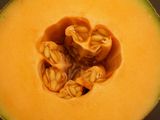

Pumpkins and other winter squashes are gloriously large fruits and are therefore excellent subjects for easy botanical observation. Carving a Jack-O-Lantern or cutting up a squash for a recipe becomes an instructive dissection when you know what to look for. We walk through the necessary information in this month’s Botany Lab of the Month. Before that we provide a brief overview of squash diversity in Food for Thought. We conclude with recent relevant media and journal articles in Gleanings and Baker’s Dozen. But, first, this cartoon from Errant Science that ties some of our summer newsletter topics to this one:
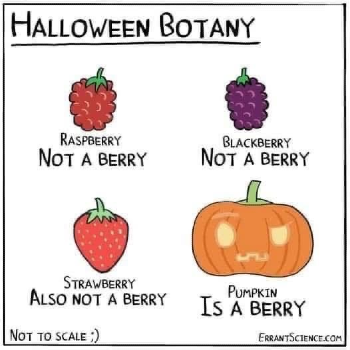
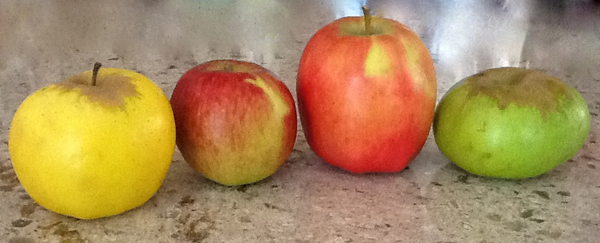
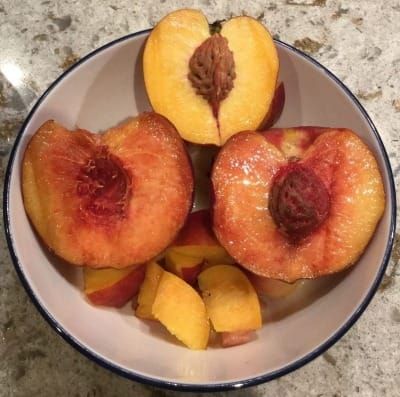
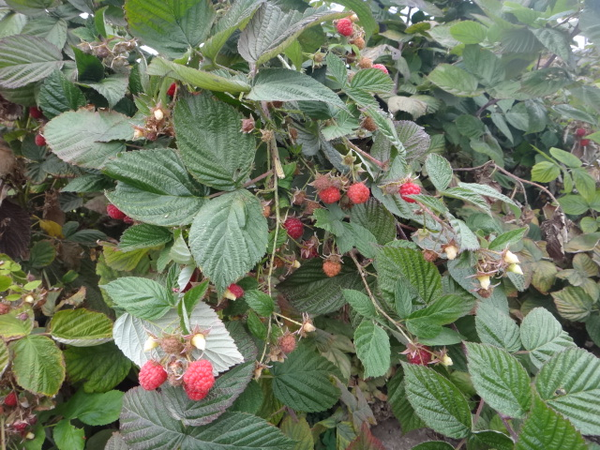
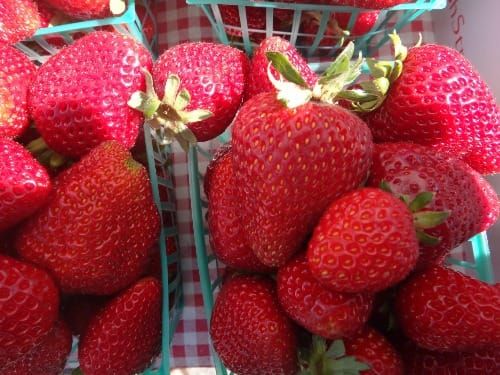
Strictly botanically speaking, a “berry” is just a fleshy fruit that arises from a flower with a single ovary. The cartoon hilariously illustrates that the colloquial use of “berry” sometimes clashes discordantly with the botanical definition. In casual speech, a berry is a smallish, juicy thing, regardless of how many ovaries the flower in question might have (raspberry and blackberry flowers have numerous ovaries, as we discussed in July’s newsletter), or whether a flower’s ovary was involved at all (the delicious part of a strawberry arises from the flower’s receptacle, not ovary, as we showed in June’s newsletter). Several fruits comfortably fit both definitions, such as blueberries (Vaccinium) and grapes (Vitis). Some botanical berries, though, like tomatoes and eggplants (Solanum), aren’t thought of as smallish and sweet. Squashes, cucumbers, and melons (and loofah!)–the cucurbits (family Cucurbitaceae)–are all pepos, a special type of berry. They develop from flowers with a single inferior ovary, surrounded by a protective hypanthium. The hypanthium fuses to the ovary wall to make the hard rind that surrounds the mature fruit (more on this below in Botany Lab of the Month). We showed in last month’s newsletter that apple flowers also have inferior ovaries. The apple hypanthium develops into delicious tissue instead of a hard rind, making apples pomes, not pepos.
Food for Thought
Squashes Demystified
Squash origins
All Cucurbita species are native to the Americas, a dozen or so species with scattered wild distributions, mostly in Mexico. Cucurbita fruits have been important dietary staples for indigenous peoples from Central America to New England for as long as people have lived there. Domestication of at least five Cucurbita species predated European exploration of the Americas by several thousand years. C. pepo may have been domesticated in Mexico by ten thousand years ago. European explorers introduced hard-shelled American Cucurbita to the rest of the world starting in the early 16th century (1–7).
Seeds of ancestral Cucurbita species are present in fossilized mastodon dung deposits, which suggests that fruits of the genus were already adapted to dispersal by large mammals even before humans got involved with its evolution through domestication. As with apples, stone fruits, and cacao, there is evidence that some ancient Cucurbita species declined in geographic extent and abundance following the Pleistocene extinction of the large animals that had pushed the evolution of its fruits toward large size and high sugar content. Humans arriving in the Americas essentially replaced the extinct megafauna and fundamentally changed the trajectory of the languishing Cucurbita, which in turn eventually became a crucial food source for the indigenous peoples of two continents (1, 3, 6, 10–19).
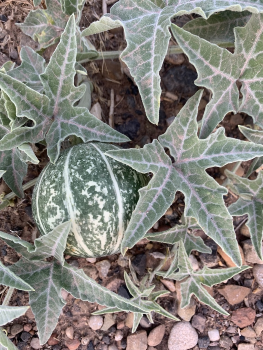
So many pumpkins
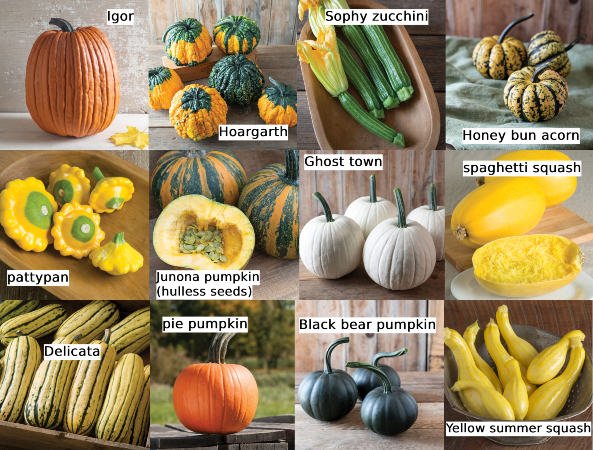
Three domesticated Cucurbita species are highly variable and constitute the vast majority of pumpkins and other squash consumed in the world: Cucurbita pepo, C. moschata, and C. maxima. Two additional Cucurbita species, C. argyrosperma (cushaw) and C. ficifolia (fig-leaf gourd), are cultivated in a few areas, mostly in Mexico and Central America. The three most common species (C. pepo, C. moschata, and C. maxima) all have varieties that include the word “pumpkin” in their common names. Most of the squashes that come to mind when you think of “pumpkin”—large Jack-O-Lantern pumpkins, orange sugar pumpkins, squat mini pumpkins, white Casper pumpkins—are varieties of Cucurbita pepo (see the C. pepo collage above for a few examples). C. pepo also includes acorn squash, delicata, stringy spaghetti squash, and most of the summer squashes—zucchini, yellow crookneck, pattypans, and marrows. Summer squash cultivars have been developed for their tender, immature fruit. They are meant to be picked well before seed maturation.
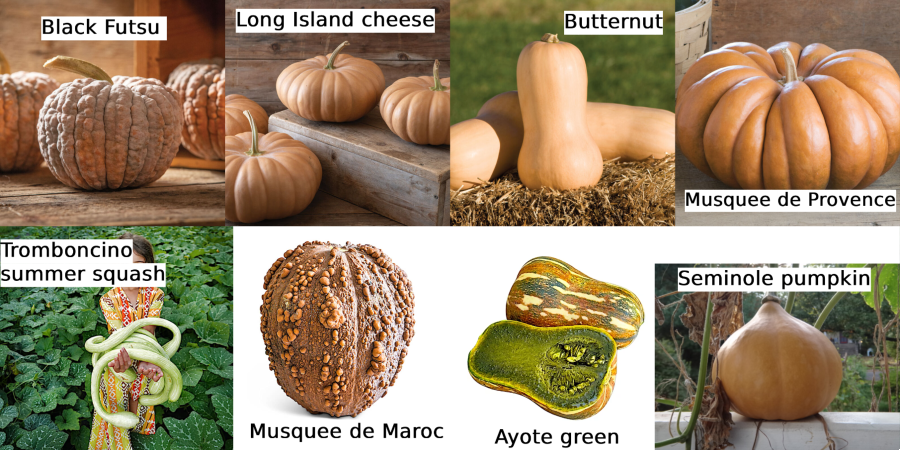
The butternuts, varieties of C. moschata, boast Seminole and Long Island Cheese pumpkins, along with the “fairytale” pumpkins and Musquee de Provence. The pureed squash inside a can of commercially canned pumpkin is yet another variety of C. moschata, the Dickinson pumpkin, developed in the early 1800s by a Kentucky farmer named Elijah Dickinson. The tromboncino is a summer squash variety of C. moschata. The giant pumpkins that people grow for the state fair, Amish pie pumpkin, kabochas, and most of those unusually-shaped or colored novelty pumpkins are all varieties of hubbard squash, C. maxima.
Botany Lab of the Month
Carve a Jack-O-Lantern like a botanist
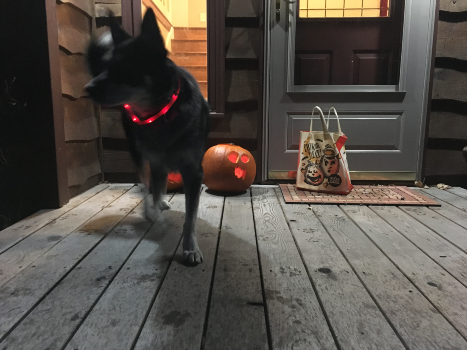
The first Jack-O-Lanterns were carved out of turnips in 17th-century Ireland (22). While the large, starchy hypocotyls (fused stem and taproot) of cruciferous vegetables are anatomically fascinating, our focus here will be the stuff you are more likely cutting through to make a modern Jack-O-Lantern out of squash. This botany lab gives you information you need to interpret your pumpkin or winter squash, whether you are carving a Halloween decoration or just making dinner.
No blue pumpkins
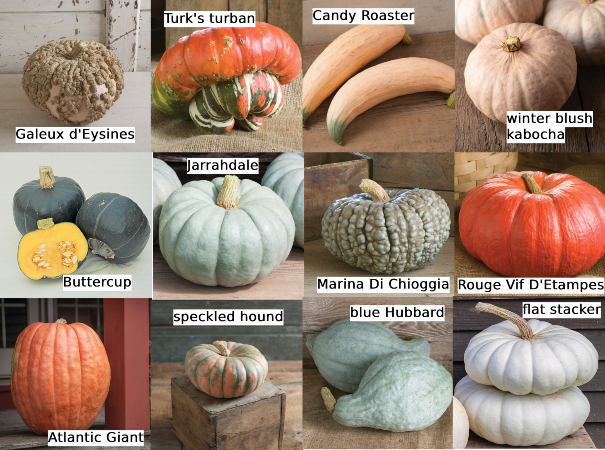
Much is known of the genetic basis of the tremendous morphological variation among Cucurbita species. We largely understand the genetic architecture of fruit shape, color, and size (7, 23–32). A white pumpkin, for example, expresses dominant alleles (gene variants) of two genes: Wf for white flesh and W for weak fruit color. A warty pumpkin has a dominant allele of the gene Wt. A squash with a green rind has retained its chlorophyll into maturity (33). The traditional orange pumpkin has the right alleles for many genes responsible for the synthesis of orange carotenoid pigments, especially lutein and beta-carotene (necessary dietary precursors for the synthesis of Vitamin A in humans and other animals). The “orange” gene Or encodes an enzyme that directs the differentiation of specialized plastids in fruit cells called chromoplasts in which those carotenoids accumulate.
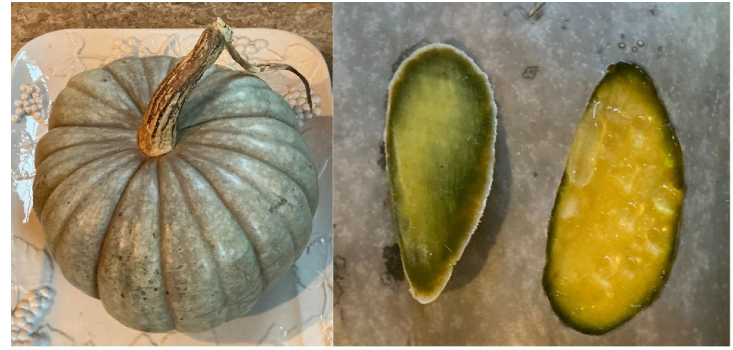
The rind of some winter squashes can appear bluish. “Blue” is even in the name of the most well known of the giant hubbards (C. maxima; see collage above). This blue is an illusion. A new paper just came out that definitively proves that none of the species in the cucurbit family are capable of making anthocyanins (34), the class of pigments responsible for blue color in most of the plant kingdom (see our April newsletter for more information about anthocyanins and other pigments). Several genes that are necessary for anthocyanin production are disabled in the Cucurbitaceae. Cucurbits manufacture extra carotenoids (yellows, oranges, reds) to compensate for the absence of anthocyanins. The bluish cast of the hubbard shell is an optical combination of a dark green rind overlain with a thick layer of cuticular wax that scatters light and appears gray (see image above, and Katherine’s essay about common plant waxes).
Pumpkin Parts
A squash is an example of a pepo, a fruit with a hard rind that develops from a flower with a single inferior ovary. “Inferior” means that the squash flower’s ovary is located within the hypanthium, the cup-like tissue that surrounds the ovary and supports the petals and sepals. Squash plants are monoecious (bearing separate staminate (“male”) and pistillate (“female”) flowers. Upon opening, the golden petals of female flowers are already subtended by a tiny squash—the inferior ovary and the hypanthium surrounding it.
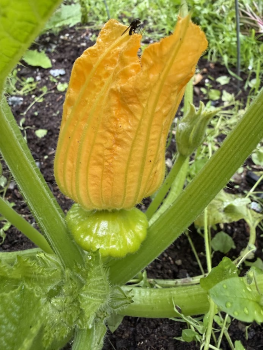
As the fruit develops, the hypanthium tissue fuses with the outer wall of the ovary (the exocarp) to become the rind, encasing the firm flesh of the mesocarp and soft endocarp within. When you scoop out the stringy, gooey stuff and seeds from inside a pumpkin, you’re scraping out both the endocarp and the placental tissue that connects the seeds to the ovary wall.
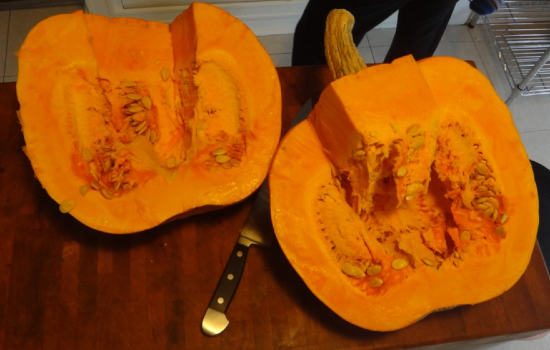
The lobes or ridges, called ribs, that characterize the shape of many squashes are formed by the buckling of the rind during fruit development (35–37). Variation in growth rate in different parts of the fruit causes the longitudinal deformation. The indented lines that define ridge boundaries usually mark the location of lines of seeds within the squash. Incidentally, some excellent analysis of pumpkin ridge formation has emerged from material science (38, 39). Engineers sometimes need lobey spheres, too.
Jack-O-Lantern carving often begins by cutting out the lid around the handle, which is really the peduncle, the specialized stem that connects the developing fruit to the plant. The peduncle is woody because it is infused with lignin. We pick summer squashes for eating when they are very immature and tender. If left to fully mature, however, the rind of summer squash fruit would also become lignified, like a bottle gourd, much harder than the shell of a ripe pumpkin, which is not lignified. The loss of lignification in the rinds of winter squash is due to a recessive allele of a single gene, hr. We would find Jack-O-Lantern carving—or dinner preparation—much more difficult if we had to cut through lignified tissues (7).
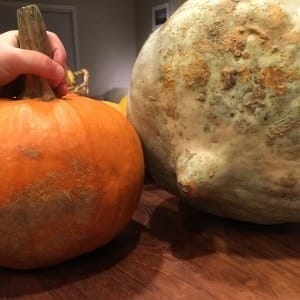
While we’re on the topic of woody tissue on the outside of the pumpkin, you might notice some areas pebbled with a rough, tan-colored callus. This is called induced lignin-like material and is the squash’s response to wounding or pathogen attack. You may see this most prominently where the squash was laying in contact with the ground, where it would experience the highest fungal attack. The round brown circle on what we perceive to be the bottom of the pumpkin is the scar left after the petals and sepals fell off the developing fruit.
Save the seeds
It’s a bit of a pain to separate the endocarpic goo from the seeds, but salted and roasted pumpkin seeds are a real treat. You can eat the pale seed coats (called the testa or integument) after the seeds are roasted. There’s no need to remove them, even though most of the commercially available pumpkin seeds have the seed coats mechanically removed. Do peel one away, though, to have a look at the olive green-colored cotyledons (leaves) of the embryo, which occupy most of the space within the seed. During seed development, the cotyledons absorb most of the nutrients from the seed’s endosperm, making the cotyledons the nutritious part of the seed, for both people and an emergent seedling. The part of the embryo that will sprout roots is in the pointy end of the teardrop-shaped seed.
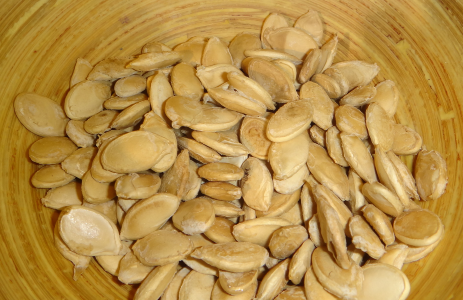
If you make your Jack-O-Lantern from one of the C. pepo varieties that has been bred for “hulless” seeds (the seed coat is actually just very thin), then you don’t have to worry about seed coats at all. Pumpkin seeds (pepitas) are integral to the cuisines of many regions in Mexico, and Cucurbita varieties grown specifically for their seeds were domesticated there long ago (10, 12).
Can you cook your Jack-O-Lantern after Halloween?
If it hasn’t become rotten or frozen, then you can cook it, but consider whether or not you should. If you carved a Jack-O-Lantern from any variety of C. maxima or C. moschata, then the flesh is of excellent quality, and not cooking it would be a huge waste. Same goes for sugar or pie pumpkin varieties of C. pepo, although those are usually too small for Jack-O-Lanterns.
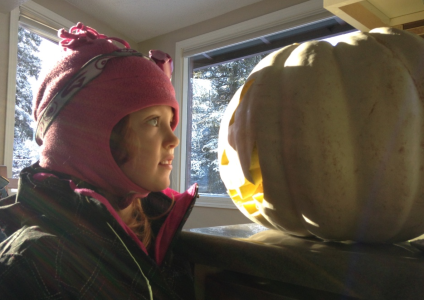
If you used a big variety of C. pepo specifically bred for Jack-O-Lantern carving, then the flesh is edible, but it typically ranks at the bottom of the deliciousness scale. You may end up with a lot of relatively bland and perhaps stringy cooked pumpkin. If it’s stringy, it’s because your pumpkin shares the same alleles for a single gene, sp, as spaghetti squash (also C. pepo), which is somehow involved in the formation of pectin bands that dissolve during cooking, leaving strings (4, 5, 7, 12, 25, 40–42). Fear not, though. A blender will fix all your squash texture woes.
Regardless of the species, though, time since harvest will affect winter squash sweetness and flavor. At maturity the squash is full of starch, but as time passes after harvest, enzymes convert the starch to sugar to fuel respiration of the still-living squash cells and seeds, and the pectins between cells break down, softening the fruit. This is why a “curing” period is recommended after winter squash harvest, to sweeten and soften it a bit.
Gleanings and Baker's Dozen
Gleanings
- All hail fall color. The Minute Earth Youtube video about why leaves change color in autumn is so great.
- Botany One on cassava
- The In Defense of Plants podcast has a few relevant recent episodes on:
- Jeremy Cherfas’s newsletter and podcasts are always worth checking out.
- His Eat This Newsletter from 21 September highlights a worthwhile recent review article from Our World in Data that compares the environmental impact of conventional and organic farming. Jeremy also rounds up recent interesting coverage of apples in the media, including our September newsletter. He mentions the very cool recent article in Scientific American about the recovery of the identity of ancestral domestic apple varieties in North America.
- Jeremy’s Eat This Podcast episode from 28 September is an interview with Lane Selman about her beautiful new book Radicchio.
- The Tomato Tomato magazine is new to us, and I’m glad Jeremy mentioned their wonderful article on chestnuts.
- The History Extra podcast interviews Eric T. Jennings about his new book Vanilla: The History of an Extraordinary Bean. Hat tip to Luigi at Agricultural Biodiversity Weblog for bringing it to our attention.
- Blue mangoes in Food & Wine
- The Radiolab podcast interviewed David George Haskell about grass
- Writing about Cucurbita this month reminded us of Chef Sean Sherman’s efforts to revive indigenous American ingredients and food preparations. He has a new restaurant.
- Sarah Trent serves up some quality eco-evo writing about scarlet monkeyflowers in High Country News.
- Merritt Turetsky is the Queen of Peat and has a new book: Bogland
- We’re excited about Asia S. Ajani’s new book Tending the Vines: Black Abundance in Eight Plants
Baker’s Dozen
- Pardo, G., et al. (2026) Yield Losses of Maize (Zea Mays Subspp.) Due to Teosinte in Northeastern Spain. Journal of Crop Health 78: 158. Teosinte has become a weed in Spain?
- The Angiosperm Phylogeny Group (2026) Large-scale nuclear and plastid phylogenomic analyses inform an updated Angiosperm Phylogeny Group classification: APG V. Journal of Systematics and Evolution 64: 845-874. APG V is live!
- Khoury, C. K., et al. (2026) Food plant diversity in a rapidly changing world. Plants 8People Planet online early. Read Luigi’s coverage of the article.
- Venkataraman, V. V., et al. (2026) The Meanings and Dividends of Man the Hunter. Evolution and Human Behavior 47: 106840.
- Schneider, R., et al. (2026) Plant Phenotypic Plasticity: From Molecular Mechanisms to Breeding and Climate Change Adaptation. Annual Review of Plant Biology 77: 707-731.
- From the latest New Phytologist:
- Charrier, G. (2026) Refreshing perspectives in a warming world: understanding the cold adaptation strategies of plants – an introduction to a Virtual Issue. New Phytologist. This is the introduction to a virtual special issue on plant cold hardiness.
- Carruthers, T., et al. (2026) Evolution in arid environments: the role of betalains, succulence, and medullary bundles. New Phytologist 252: 1250-1268.
- The latest Plants People Planet is full of great papers. These are just a few:
- Sorokin, A. N., et al. (2026) A step into the shadows: Evolutionary shifts in fruit structure and dispersal strategies in Asian mycoheterotrophic Ericaceae. Plants People Planet 8: 1419-1433. A shift from dry fruits to fleshy fruits.
- Cáceres, F., et al. (2026) Ethnobotanical insights into the medicinal and food uses of Lamiaceae in the Mediterranean region: A systematic review and meta-analysis. Plants People Planet 8: 1500-1516.
- Gutknecht, J. L., et al. (2026) Development and adoption of Kernza—A perennial grain crop for sustainable agriculture. Plants People Planet 8: 1517-1532. A review.
- Santo Domingo, M., et al. (2026) Engineering compact Physalis peruviana (goldenberry) to promote its potential as a global crop. Plants People Planet 8: 1550-1556.
- Tighe, A. J. (2026) The potential effect of megafaunal extinctions on modern conservation of horse chestnut Aesculus hippocastanum. Plants People Planet 8: 1660-1663. Figure 1 features an artist’s interpretation of straight-tusked elephant poo with a seedling sprouting from it. This sparked joy. Megafauna!
- Gori, B., et al. (2026) A comprehensive checklist of Mediterranean wild edible plants: Diversity, traditional uses, and knowledge gaps. Plants People Planet 8: 1616-1633.
- Wild, I. M., et al. (2026) Climate requirements for cultivated Liberica coffee (Coffea liberica) and consequences for its use and development as a crop species. Plants People Planet 8: 1890-1903.
- Barea-Marquez, A., et al. (2026) A synthetic eco-evolutionary proposal for the conservation of wild relatives of the olive tree. Plants People Planet 8: 1904-1924.
- Recent in PNAS:
- Albright, A. L., et al. (2026) Rainfall extremes drive cocoa yield losses across the tropics. PNAS 123 Oh noes!
- Chen, R., et al. (2026) Plant fiber exploitation contributed to the emergence of ground-edged cutting tools in North China. PNAS 123: e2608882123. Fiber and non-food crops matter, too.
- Van Amburg, C., D. Babel, and M. W. Feldman. Domestication as gene–culture coevolution. PNAS 123: e2620741123.
- Philippe, G., et al., (2026) The multilayered cuticle underlying structural coloration in red algae shares features with the metazoan extracellular matrix. PNAS 123: e2610789123. Yes, we know that red algae are not plants. We think of them as spiritually close, though. This is good work, and there is a commentary.
- Kraaij, T., et al. (2026) Palatability of geophyte underground storage organs partially explains their depth in the Cape Floristic Region, geophyte capital of the world. American J. Botany online early. The South African tourism board should advertise that it is home to the geophyte capital of the world. It would work on us.
- Annals of Botany:
- Liu, M., et al. (2026) Functional synonymous variants in plants: an emerging perspective on hidden causal alleles in domestication and agronomic traits. Annals of Botany 138: 158-170. Is my brain now broken? Maybe a little bit. The authors do a good job of contextualizing their result, confirming, yes, this is weird.
- Nieto-Lugilde, D., et al (2026) Genomic structure, introgression, niche overlap and morphological variation challenge species delimitation in Thymus sect. Mastichina. Annals of Botany 138: 1194-1208. Thyme
- Yang, H., et al. Phylogenomic conflict and reticulate evolution during radiative diversification of the genus Rheum. Annals of Botany 138: 1210-1222. Rhubarb
- Meeprom, N., et al. A global phylogenetic framework for Diospyros L. (Ebenaceae, Ericales): enhanced taxon and sample coverage through NGS, Sanger sequencing and herbariomics. Annals of Botany 138: 442-461. Persimmons and ebony. Also: herbariomics? Cute.
- Cao, X., et al. (2026) A high-quality bread wheat genome unravels the adaptive evolution of wheat end-use quality. Nature Plants 12: 964-977.
- Irmišová, J., et al. (2026) American Useful Plants in Post-Medieval Europe: Integrating Archaeobotanical and Historical Evidence. Ethnobotany and Economic Botany 80: 353-374.
- Oldie but Goodie: 2026 Nobel Prize in Chemistry was awarded jointly to Henri B. Kagan and Kenso Soai "for the discovery of non-linear effects and autocatalysis in asymmetric organic synthesis." In honor of this celebration of chirality, we revisit our essay on isomers, in which we describe how chirality affects the flavors of some herbs and spices.
References
1. G. Chomicki, H. Schaefer, S. S. Renner, Origin and domestication of Cucurbitaceae crops: insights from phylogenies, genomics and archaeology. New Phytol. 226, 1240–1255 (2020).
2. G. Castellanos-Morales, L. M. Paredes-Torres, N. Gámez, H. S. Hernández-Rosales, G. Sánchez-de la Vega, J. Barrera-Redondo, E. Aguirre-Planter, A. Vázquez-Lobo, S. Montes-Hernández, R. Lira-Saade, L. E. Eguiarte, Historical biogeography and phylogeny of Cucurbita: Insights from ancestral area reconstruction and niche evolution. Mol. Phylogenet. Evol. 128, 38–54 (2018).
3. A. S. Dhatt, S. Pandey, K. S. Garcha, N. Verma, V. Sagar, M. Sharma, Comprehensive review of pumpkin (Cucurbita spp.): Domestication, global distribution, genetic characterization, breeding strategies, and genomic insights. Veg. Sci. 51, 196–210 (2024).
4. L. Gong, H. S. Paris, M. H. Nee, G. Stift, M. Pachner, J. Vollmann, T. Lelley, Genetic relationships and evolution in Cucurbita pepo (pumpkin, squash, gourd) as revealed by simple sequence repeat polymorphisms. Theor. Appl. Genet. 124, 875–891 (2012).
5. H. R. Kates, P. S. Soltis, D. E. Soltis, Evolutionary and domestication history of Cucurbita (pumpkin and squash) species inferred from 44 nuclear loci. Mol. Phylogenet. Evol. 111, 98–109 (2017).
6. A. Nyu, The Domestication of Pumpkins: Historical Perspectives and Modern Genetic Evidence. Int. J. Hortic. 14 (2024).
7. H. S. Paris, A. Lebeda, E. Křistkova, T. C. Andres, M. H. Nee, Parallel Evolution Under Domestication and Phenotypic Differentiation of the Cultivated Subspecies of Cucurbita pepo (Cucurbitaceae). Econ. Bot. 66, 71–90 (2012).
8. Seminole Pumpkin – Gardening Solutions. https://gardeningsolutions.ifas.ufl.edu/plants/edibles/vegetables/seminole-pumpkin/.
9. A. T. Erwin, E. P. Lana, The Seminole pumpkin. Econ. Bot. 10, 33–37 (1956).
10. A. I. Domic, A. M. VanDerwarker, H. B. Thakar, K. Hirth, J. M. Capriles, T. K. Harper, T. E. Scheffler, L. Kistler, D. J. Kennett, Archaeobotanical evidence supports indigenous cucurbit long-term use in the Mesoamerican Neotropics. Sci. Rep. 14, 10885 (2024).
11. T. M. Peres, Foodways Archaeology: A Decade of Research from the Southeastern United States. J. Archaeol. Res. 25, 421–460 (2017).
12. H. S. Paris, Historical records, origins, and development of the edible cultivar groups of Cucurbita pepo (Cucurbitaceae). Econ. Bot. 43, 423–443 (1989).
13. M. M. Pires, P. R. Guimarães, M. Galetti, P. Jordano, Pleistocene megafaunal extinctions and the functional loss of long-distance seed-dispersal services. Ecography 41, 153–163 (2018).
14. H. S. Hernández-Rosales, R. Martínez de León, E. Aguirre-Planter, R. Lira, L. E. Eguiarte, Population genomics of Mexican landraces of the squash Cucurbita moschata reveals structure and environmental adaptation. Biol. J. Linn. Soc. 146, blaf064 (2025).
15. S. A. Søndergaard, C. Fløjgaard, R. Ejrnæs, J.-C. Svenning, Shifting baselines and the forgotten giants: integrating megafauna into plant community ecology. Oikos 2025, e11134 (2025).
16. N. S. Pope, A. Singh, A. K. Childers, K. M. Kapheim, J. D. Evans, M. M. López-Uribe, The expansion of agriculture has shaped the recent evolutionary history of a specialized squash pollinator. Proc. Natl. Acad. Sci. 120, e2208116120 (2023).
17. J. Iriarte, S. Elliott, S. Y. Maezumi, D. Alves, R. Gonda, M. Robinson, J. Gregorio de Souza, J. Watling, J. Handley, The origins of Amazonian landscapes: Plant cultivation, domestication and the spread of food production in tropical South America. Quat. Sci. Rev. 248, 106582 (2020).
18. M. Stewart, C. Peters, M. J. Ziegler, W. C. Carleton, P. Roberts, N. Boivin, H. S. Groucutt, The state of the late Quaternary megafauna extinction debate: a systematic review and analysis. Front. Mammal Sci. 4 (2025).
19. G. Castellanos-Morales, K. Y. Ruiz-Mondragón, H. S. Hernández-Rosales, G. Sánchez-de la Vega, N. Gámez, E. Aguirre-Planter, S. Montes-Hernández, R. Lira-Saade, L. E. Eguiarte, Tracing back the origin of pumpkins (Cucurbita pepo ssp. pepo L.) in Mexico. Proc. R. Soc. B Biol. Sci. 286, 20191440 (2019).
20. W. P. Bemis, T. W. Whitaker, The Xerophytic Cucurbita of Northwestern Mexico and Southwestern United States. Madroño 20, 33–41 (1969).
21. M. Nee, The domestication of Cucurbita (Cucurbitaceae). Econ. Bot. 44, 56–68 (1990).
22. L. Piatti-Farnell, “Spectral Pumpkins: Cultural Icons and the Gothic Everyday” in The Gothic and the Everyday: Living Gothic, L. Piatti-Farnell, M. Beville, Eds. (Palgrave Macmillan UK, London, 2014; https://doi.org/10.1057/9781137406644_6), pp. 85–102.
23. H. S. Paris, R. N. Brown, The Genes of Pumpkin and Squash. HortScience 40, 1620–1630 (2005).
24. Y.-J. Zhong, Y.-Y. Zhou, J.-X. Li, T. Yu, T.-Q. Wu, J.-N. Luo, S.-B. Luo, H.-X. Huang, A high-density linkage map and QTL mapping of fruit-related traits in pumpkin (Cucurbita moschata Duch.). Sci. Rep. 7, 12785 (2017).
25. L. E. Wyatt, S. R. Strickler, L. A. Mueller, M. Mazourek, An acorn squash (Cucurbita pepo ssp. ovifera) fruit and seed transcriptome as a resource for the study of fruit traits in Cucurbita. Hortic. Res. 2, 14070 (2015).
26. W. Xia, C. Chen, S. Jin, H. Chang, X. Ding, Q. Fan, Z. Zhang, B. Hua, M. Miao, J. Liu, Multi-Omics Analysis Reveals the Distinct Features of Metabolism Pathways Supporting the Fruit Size and Color Variation of Giant Pumpkin. Int. J. Mol. Sci. 25, 3864 (2024).
27. C. Wang, J. Cao, N. Hao, T. Wu, Genetic and Molecular Regulation Mechanisms in the Formation and Development of Vegetable Fruit Shape. Appl. Sci. 12, 1514 (2022).
28. M. Rafiq, M. Guo, A. Shoaib, J. Yang, S. Fan, H. Xiao, K. Chen, Z. Xie, C. Cheng, Unraveling the Hormonal and Molecular Mechanisms Shaping Fruit Morphology in Plants. Plants 14, 974 (2025).
29. Y. Pan, Y. Wang, C. McGregor, S. Liu, F. Luan, M. Gao, Y. Weng, Genetic architecture of fruit size and shape variation in cucurbits: a comparative perspective. Theor. Appl. Genet. 133, 1–21 (2020).
30. K. Kaźmińska, E. Hallmann, A. Rusaczonek, A. Korzeniewska, M. Sobczak, J. Filipczak, K. S. Kuczerski, J. Steciuk, M. Sitarek-Andrzejczyk, M. Gajewski, K. Niemirowicz-Szczytt, G. Bartoszewski, Genetic mapping of ovary colour and quantitative trait loci for carotenoid content in the fruit of Cucurbita maxima Duchesne. Mol. Breed. 38, 114 (2018).
31. C. O. Hernandez, L. E. Wyatt, M. R. Mazourek, Genomic Prediction and Selection for Fruit Traits in Winter Squash. G3 GenesGenomesGenetics 10, 3601–3610 (2020).
32. A. Dalda-Şekerci, K. Karaman, H. Yetişir, Characterization of ornamental pumpkin (Cucurbita pepo L. var. ovifera (L.) Alef.) genotypes: molecular, morphological and nutritional properties. Genet. Resour. Crop Evol. 67, 533–547 (2020).
33. C. Wang, W. Ding, F. Chen, K. Zhang, Y. Hou, G. Wang, W. Xu, Y. Wang, S. Qu, Mapping and transcriptomic profiling reveal that the KNAT6 gene is involved in the dark green peel colour of mature pumpkin fruit (Cucurbita maxima L.). Theor. Appl. Genet. 137, 225 (2024).
34. N. Choudhary, M. Hagedorn, B. Pucker, Out of the blue: Family-wide loss of anthocyanin biosynthesis in Cucurbitaceae. bioRxiv [Preprint] (2026). https://doi.org/10.1101/2025.10.06.680802.
35. P. Ball, Why fruit are groovy. Nature, doi: 10.1038/news.2008.1236 (2008).
36. S. Eran, M. Michael, S. Harry, Leaves, Flowers and Garbage Bags: Making Waves. Am. Sci. 92, 254 (2004).
37. D. L. Hu, P. Richards, A. Alexeev, The growth of giant pumpkins: How extreme weight influences shape. Int. J. Non-Linear Mech. 46, 637–647 (2011).
38. J. Yin, X. Chen, I. Sheinman, Anisotropic buckling patterns in spheroidal film/substrate systems and their implications in some natural and biological systems. J. Mech. Phys. Solids 57, 1470–1484 (2009).
39. D. Wu, J. Song, Z. Zhai, M. Hua, C. Kim, I. Frenkel, H. Jiang, X. He, Visualizing Morphogenesis through Instability Formation in 4‑D Printing. ACS Appl. Mater. Interfaces 11, 47468–47475 (2019).
40. T. K. Lim, “Cucurbita pepo ‘Vegetable Spaghetti’” in Edible Medicinal And Non-Medicinal Plants: Volume 2, Fruits, T. K. Lim, Ed. (Springer Netherlands, Dordrecht, 2012; https://doi.org/10.1007/978-94-007-1764-0_43), pp. 295–297.
41. S. Wang, H. Han, X. Zhang, X. Mao, Y. Li, Z. Si, N. Song, Y. Ren, Efficient extraction of pectin from spaghetti squash (Cucurbita pepo L. subsp. pepo) peel by electron beam irradiation combined with ultrasound: Structural characterization and functional properties. Food Chem. 485, 144492 (2025).
42. C. O. Hernandez, J. Labate, K. Reitsma, J. Fabrizio, K. Bao, Z. Fei, R. Grumet, M. Mazourek, Characterization of the USDA Cucurbita pepo, C. moschata, and C. maxima germplasm collections. Front. Plant Sci. 14 (2023).